
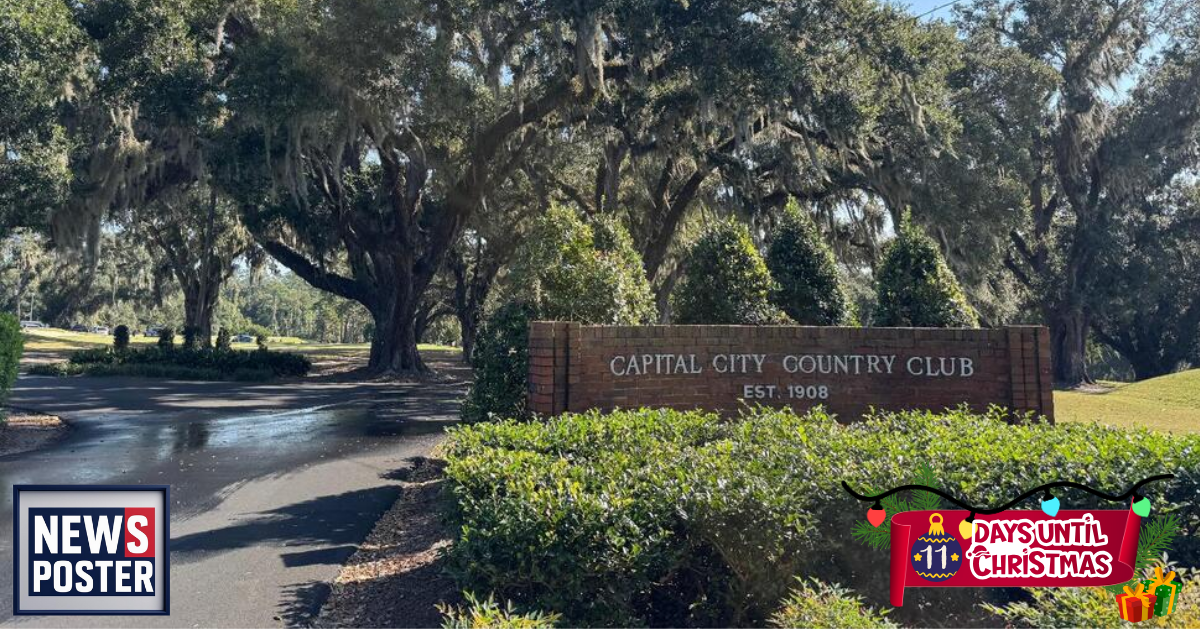
TALLAHASSEE, FLORIDA – Local officials in Tallahassee, Florida, have approved the sale of a city-owned golf course built over the graves of enslaved people to a country club with a segregated past, despite strong opposition from residents and historians. The decision came from a 3-2 vote by the Tallahassee City Commission on Wednesday, approving the $1.255 million sale of the 178-acre course in one of the city’s most desirable neighborhoods.
The Capital City Country Club sits atop the burial grounds of enslaved people who once lived on the plantation where the course now lies. In 2019, National Park Service archaeologists identified 23 unmarked graves and 14 possible graves near the 7th hole. The sale has reignited debate over Tallahassee’s history of segregation and the city’s delayed efforts to create a commemorative site for the graves, more than four years after the commission initially voted to preserve them. Local activist and FAMU student Justin Jordan emphasized the importance of protecting the site, saying many descendants of enslaved people have no access to the history or resting places of their ancestors.
Under the terms of the deal, the property must remain an 18-hole golf course and cannot be developed. About $98,000 from the sale will fund construction of the memorial, with public access guaranteed, provided visitors do not interfere with golfers. The country club has also agreed to host Florida A&M University’s golf team for practices and competitions, and the university’s board of trustees has endorsed the arrangement.
Critics remain concerned about selling the land to a club with a historically whites-only membership, citing both the site’s historical significance and its prime real estate value near the state Capitol. Commissioner Jeremy Matlow, who voted against the sale, warned of privatizing the land for a politically connected elite, referencing the club’s prominent members, including attorneys general.
The property has alternated between public and private control for decades. The club paid the city $1 per year under a lease that began in 1956, after regaining private ownership and avoiding the effects of a Supreme Court ruling that outlawed segregation in public recreational facilities. Despite the controversy, the deal passed with support from a majority of commissioners, including the board’s two Black members. Commissioner Dianne Williams-Cox framed the vote as a step toward moving beyond the city’s segregated past and reinvesting the proceeds into public services.