
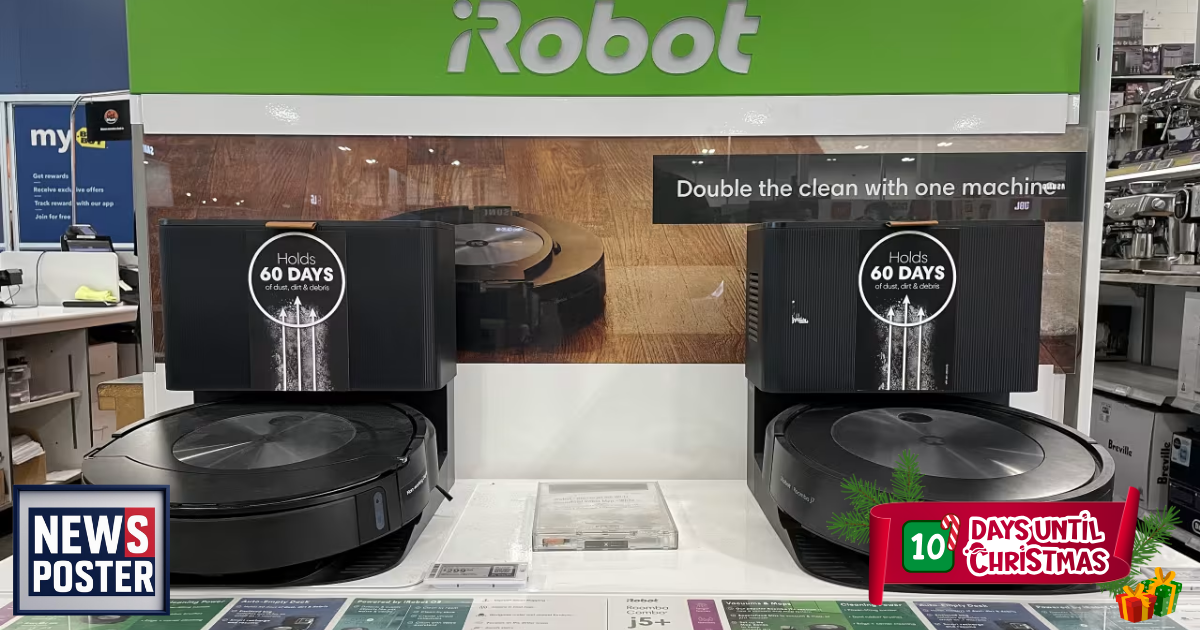
iRobot, the maker of the Roomba robotic vacuum, filed for Chapter 11 bankruptcy protection on Sunday, announcing plans to go private after being acquired by its primary manufacturer, Picea Robotics. The company cited mounting pressure from lower-priced competitors and new U.S. tariffs as key factors driving the decision, following earlier concerns about its ability to remain in business.
The company generated approximately $682 million in revenue in 2024, but profits have been squeezed by competition from Chinese rivals such as Ecovacs Robotics. While iRobot remains a market leader in the U.S. and Japan, it has had to lower prices and invest heavily in technology upgrades. U.S. tariffs, including a 46% levy on imports from Vietnam, where many Roombas are produced, increased costs by $23 million in 2025 and complicated future planning.
iRobot carries about $190 million in debt from a 2023 loan used to refinance operations, while a European antitrust investigation blocked a $1.4 billion acquisition by Amazon. After falling behind on payments to Picea, the China-based manufacturer acquired iRobot’s debt from investment funds managed by the Carlyle Group. Under the bankruptcy plan, Picea will take full ownership of iRobot, cancel the $190 million loan, and forgive an additional $74 million owed under their manufacturing agreement. Other creditors and suppliers are expected to be paid in full.
The company said the bankruptcy will not affect app functionality, customer programs, supply chain operations, or product support. Once valued at $3.56 billion during pandemic-driven demand, iRobot is now estimated to be worth around $140 million. Founded in 1990 by three MIT roboticists, the company initially focused on defense and space projects before launching the Roomba in 2002. The product quickly became a success, now holding roughly 42% of the U.S. market and 65% of the Japanese market for robotic vacuums. iRobot is headquartered in Bedford, Massachusetts, and employs 274 people.