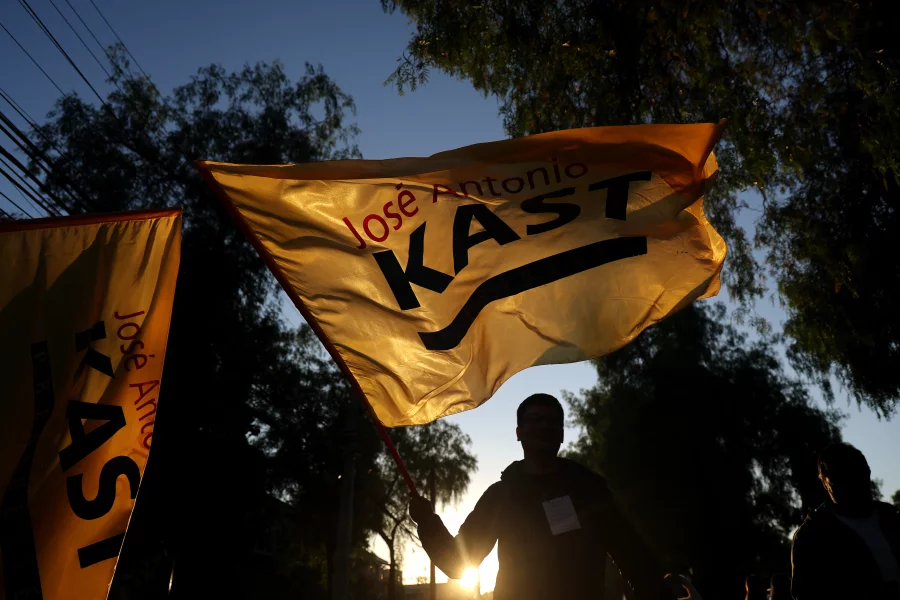

SANTIAGO, CHILE – Chile has made a sharp turn to the right as José Antonio Kast, a hardline conservative, won the country’s presidential runoff, campaigning heavily on concerns over crime, migration, and economic uncertainty.
With more than 99% of ballots counted, Kast, leader of the Republican Party, captured over 58% of the vote. His opponent, Communist Party candidate Jeannette Jara, received just over 41% and conceded defeat on social media, stating, “democracy spoke loud and clear.” Outgoing President Gabriel Boric called Kast to congratulate him on his victory.
Celebrations erupted in Santiago as car horns honked and crowds waving Chilean flags filled one of the city’s wealthiest districts, gathering to hear the president-elect speak. “We will work relentlessly to restore peace, order, growth, and hope,” Kast said, pledging to be “the president of all Chileans.” He added, “Chile will be free from crime again, free from anguish, free from fear.”
During the campaign, Kast largely avoided discussing his ultra-conservative social positions—such as support for a total abortion ban, traditional gender roles, and opposition to same-sex marriage—that had hindered his previous presidential bids. Instead, the 59-year-old devout Catholic focused on public security and immigration, warning the country was in “crisis” and promising to lead an “emergency” government. His message resonated with voters amid rising violent crime and concerns about undocumented migration.
A known admirer of former dictator Augusto Pinochet, Kast will become the first Chilean president since 1990 to openly support the military regime. His father, Michael Kast, was a member of the Nazi Party who served in the German army during World War II before emigrating to Chile in 1950.
Kast is scheduled to take office on March 11, 2026, and has vowed to give undocumented migrants until that date to leave the country, warning that those who remain could face deportation or prosecution.
His election marks a shift after years of left-of-center rule and reflects a wider regional trend in Latin America, where security and migration have increasingly shaped elections. In recent months, Bolivia ousted socialists who had been in power for nearly two decades, Argentina’s La Libertad Avanza gained legislative strength under President Javier Milei, and Ecuador re-elected center-right Daniel Noboa.
Far-right Argentine President Javier Milei praised Kast’s win, calling it evidence that Latin America is moving away from “the oppressive shackles of 21st-century socialism.” U.S. Secretary of State Marco Rubio congratulated Kast on Twitter, noting that Washington looks forward to “partnering with his administration to strengthen regional security.”