
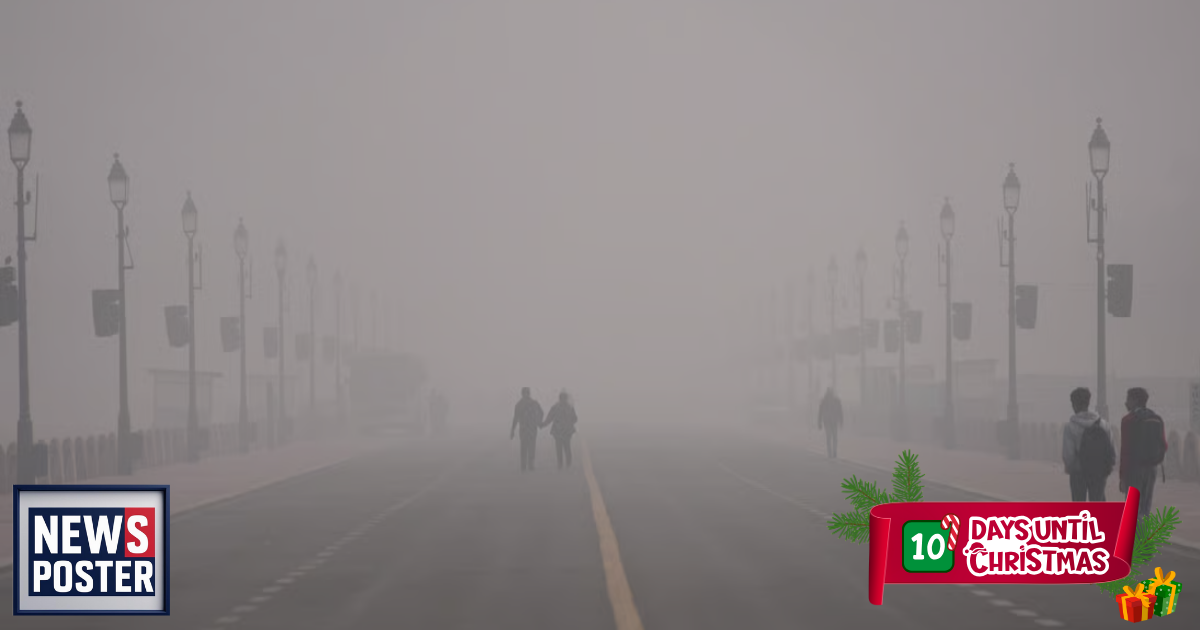
NEW DELHI, INDIA – Dense, toxic smog engulfed New Delhi on Monday, driving air pollution to hazardous levels, disrupting travel, and prompting authorities to impose emergency containment measures. Over 40 flights were canceled, dozens more were delayed, and more than 50 trains experienced significant delays. Hospitals reported a surge in patients suffering from breathing difficulties and eye irritation, with health officials urging residents to avoid outdoor activities.
Air quality readings reached 449 on Monday, well above the government’s “severe” threshold, which can seriously affect those with heart or lung conditions and cause respiratory effects even in healthy individuals. Children, the elderly, pregnant women, and people with pre-existing conditions were advised to exercise extra caution and wear N95 masks outdoors. The smog has been intensified by wintertime crop residue burning in nearby states, cooler temperatures trapping pollution, vehicle emissions, construction, and industrial activity. Authorities have banned construction work, limited diesel generator and car usage, deployed water sprinklers, and allowed students and workers to stay home. Environmentalists warn that long-term solutions are needed, as New Delhi and surrounding regions, home to over 30 million people, are among the world’s most polluted areas year-round. Earlier protests highlighted public frustration, and studies have linked chronic exposure to air pollution in India to 1.5 million additional deaths annually. A recent cloud-seeding attempt aimed at clearing the air failed to produce rainfall.