
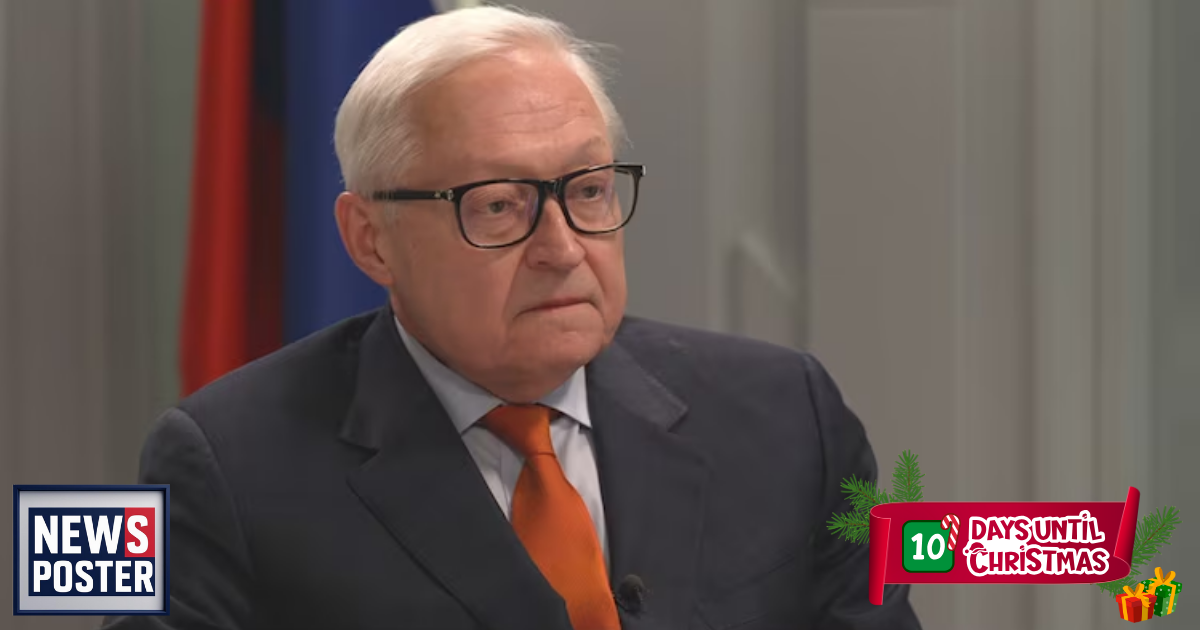
Russian Deputy Foreign Minister Sergey Ryabkov said on Monday that he believes Russia and Ukraine are “on the verge” of reaching a diplomatic agreement to end the conflict.
“We are prepared to have a deal,” Ryabkov said, adding that he hopes an agreement is reached “sooner rather than later.” U.S. officials also indicated that a peace deal may be closer than ever, suggesting that most of the outstanding issues between the two countries—around 90%—have been resolved.
Despite these signs, Ryabkov reiterated Russia’s long-standing demands that Ukraine has consistently rejected, including Moscow’s control over Crimea and four other partially-occupied territories: Donetsk, Luhansk, Zaporizhzhia, and Kherson. Ukrainian President Volodymyr Zelenskyy has repeatedly ruled out territorial concessions. “We have five altogether,the and we are not able, in any form, to compromise on this,” Ryabkov said.
Another major obstacle for Russia is the potential deployment of NATO troops to Ukraine after the conflict. Ryabkov stated that Russia would not accept any presence of NATO forces on Ukrainian soil, whether as a security guarantee or as part of a coalition of allied countries. “We definitely will not at any moment subscribe to, agree to, or even be content with, any presence of NATO troops on the Ukrainian territory,” he said.
Ryabkov, a senior figure in Russia’s Foreign Ministry since 2008 and deputy to Foreign Minister Sergey Lavrov, has often communicated Russian positions to international media. He has consistently downplayed Russia’s intentions prior to the 2022 invasion, asserting in January 2022 that Moscow had “no intention of attacking, staging an offensive on or invading Ukraine.” He also refers to the ongoing conflict as a “special military operation,” in line with Kremlin terminology.
On the humanitarian impact, Ryabkov claimed that Russia’s actions aim to protect ethnic Russians in Ukraine, expressing sympathy for those affected by the fighting. “The whole purpose of what is being done by us there is to ensure that at least some of those people, majority of those people, find it better and find it, I would say, more appropriate to be where they belong, which is Russia,” he said.
Ryabkov has also addressed U.S.-Russia relations during the war, including arms control and nuclear treaties. He emphasized that meaningful progress with Washington would only occur once Russia sees “substantive and irreversible improvements” in U.S. policy. Last month, he suggested that a meeting between former President Trump and President Putin could be possible as peace talks continue, adding, “I wouldn’t rule anything out.”