
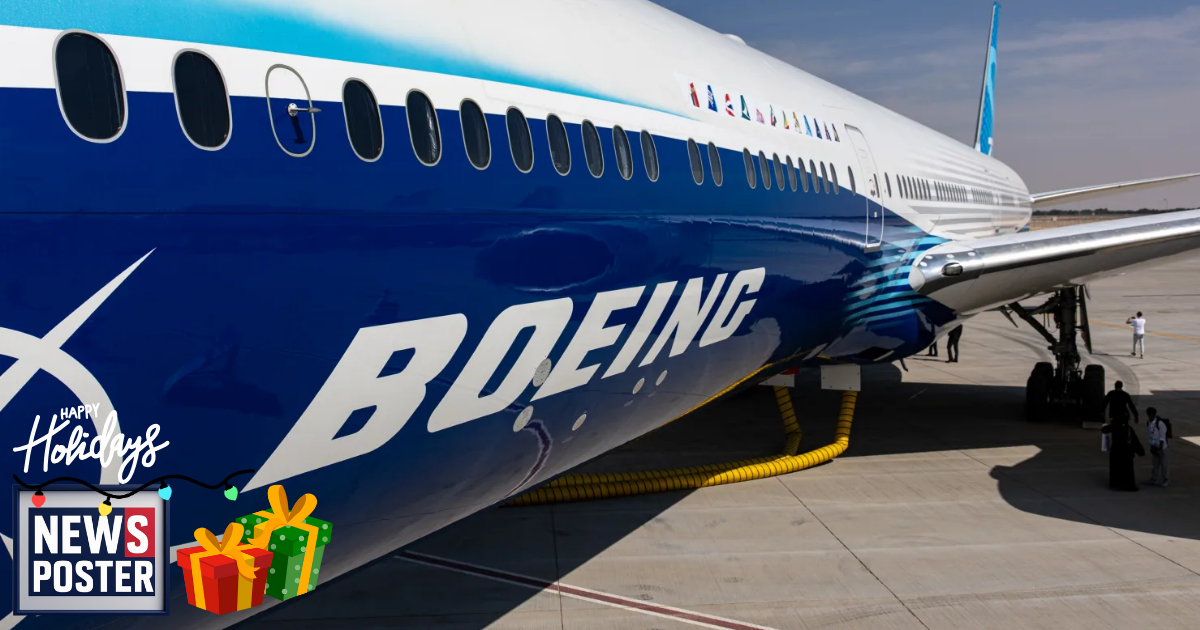
Boeing delivered 44 new aircraft in November, a decrease from 53 the previous month, falling behind European competitor Airbus, which delivered 72 planes.
The U.S. planemaker reported that 32 of the deliveries were single-aisle 737 Max jets, including five sent to Southwest Airlines. Other deliveries included six 787s, with two 787-10s going to TAAG Angola Airlines, supporting the carrier’s expansion plans. Boeing also delivered two 777 freighters—one to Turkish Airlines and one to Moldova-based Aerotranscargo—and four 767s.
In terms of orders, Boeing received 164 new requests in November, offset by 38 cancellations, resulting in 126 net new orders. Seventy-four of the new orders were for the long-delayed 777X wide-body, which is now expected to enter service in 2027, seven years behind schedule. Emirates, the launch customer, placed an additional 65 orders for the 777X during the Dubai Airshow, bringing its total to 270 jets. Taiwan’s China Airlines ordered nine 777X aircraft, following a previous order for 14 jets earlier this year.
Boeing also received 30 orders for 787s, including 15 from Gulf Air, eight from Uzbekistan Airways, six from Etihad Airways, and one from an undisclosed buyer. Forty-three 737 Max orders came from unidentified buyers. The company also booked orders for 15 KC-46 tankers from the U.S. Air Force and two 777 freighters. At the same time, Etihad canceled 15 777X orders, Air Canada canceled four 787 orders, and South Africa’s Comair canceled five 737 Max orders.
Through November, Boeing had delivered 537 jets, including 396 737 Maxs, 74 787s, 33 777s, and 28 767s. The company recorded 1,000 new orders in 2025, or a net 908 after accounting for cancellations and conversions, leaving an order backlog of 6,019 jets at the end of the month.
Boeing Chief Financial Officer Jay Malave said the company expects positive cash flow in 2026, driven by higher jet deliveries.