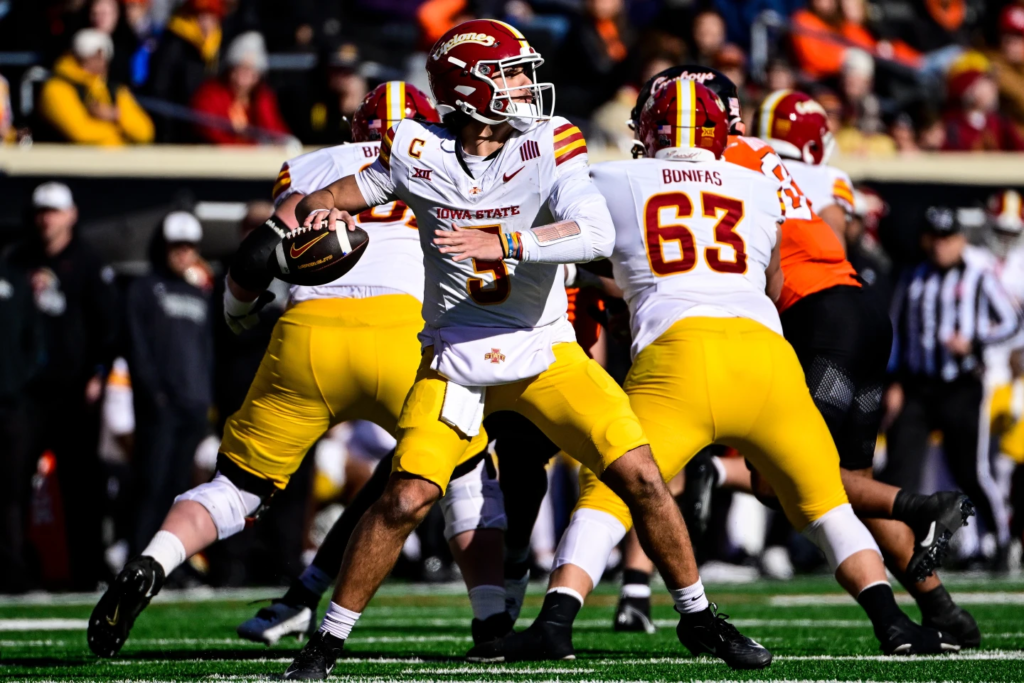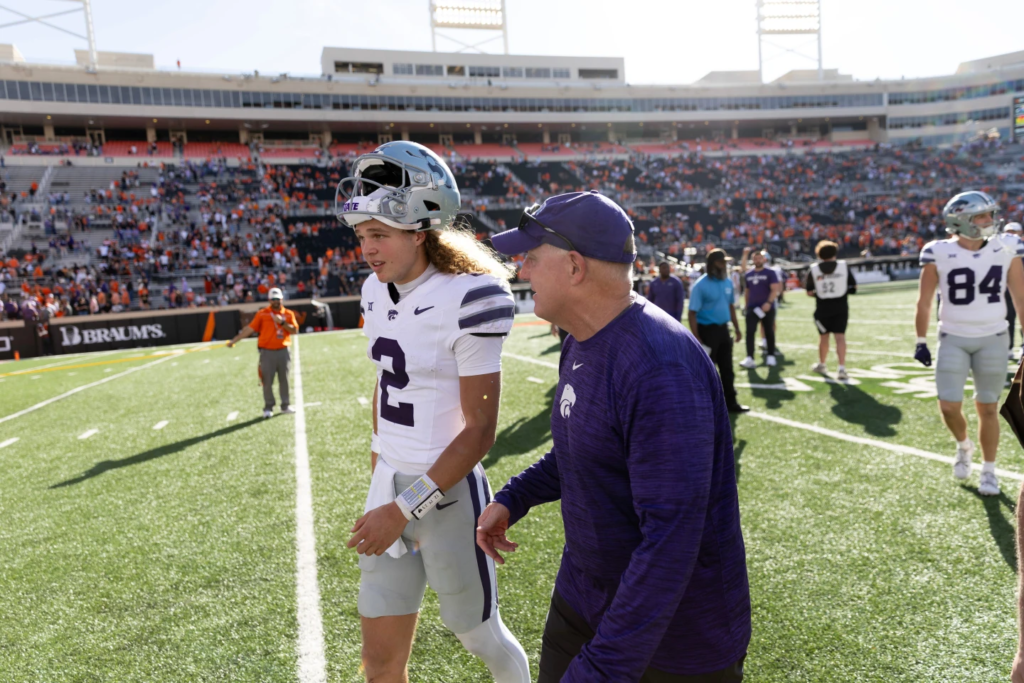
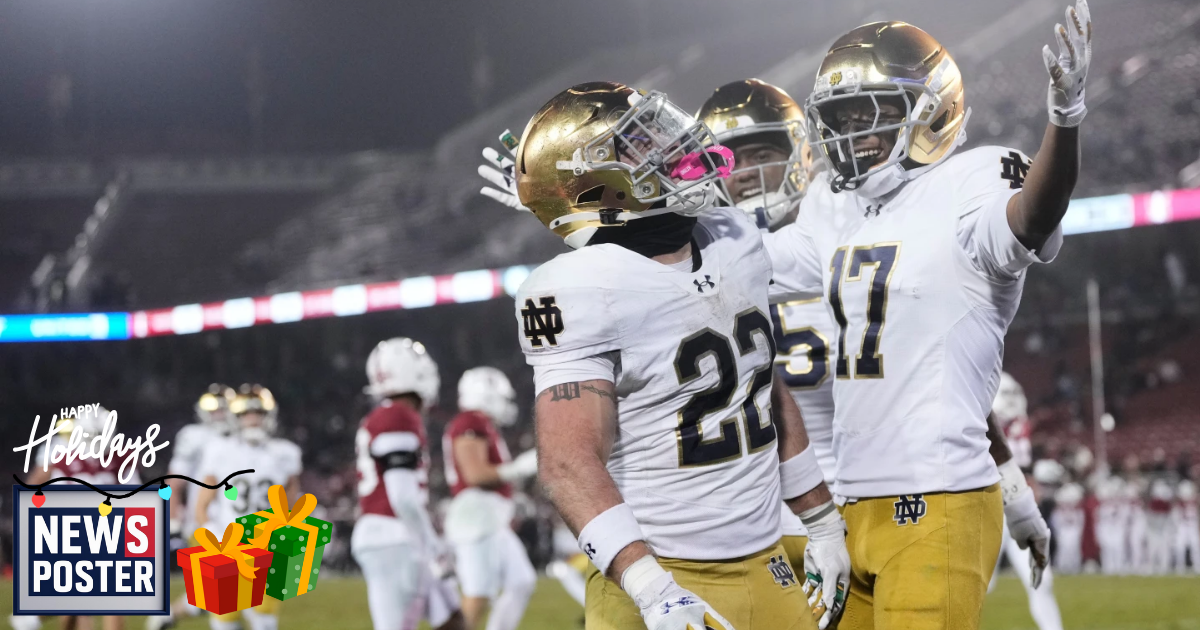
What began as a bowl season with enough eligible teams to fill every slot shifted rapidly on Sunday when Notre Dame, Iowa State, and Kansas State unexpectedly announced they would decline postseason invitations despite meeting the six-win threshold. Their decisions—driven by coaching changes, roster concerns, and program direction—upended the bowl selection order and opened the door for teams with losing records to step into postseason games.
With 41 bowls requiring 82 eligible teams, the field initially appeared perfectly balanced. But Iowa State and Kansas State, both managing transitions at head coach, declared they were shutting down for the year within hours of each other. Notre Dame followed soon after, announcing that it would not pursue a postseason appearance despite finishing 10-2 and ranking inside the top 11 nationally. The shift immediately elevated 5-7 teams with strong Academic Progress Rates, allowing Mississippi State and Rice to secure bowl berths. Mississippi State accepted an invitation to face Wake Forest in the Duke’s Mayo Bowl in Charlotte, while Rice was selected to play Texas State in the Armed Forces Bowl in Fort Worth.
The domino effect continued throughout the day. The Birmingham Bowl, after multiple 5-7 teams declined opportunities, ultimately secured Appalachian State to face Georgia Southern in a rematch of their narrow November meeting. While the three high-profile programs opting out would not have landed in these lower-tier matchups, their decisions reshuffled the entire selection hierarchy, enabling several teams to climb into more favorable slots and leaving others scrambling.
Notre Dame’s withdrawal came shortly after it was revealed as the first team left out of the College Football Playoff. The program released a statement saying the team collectively chose to conclude its season and look ahead to next year, expressing gratitude to fans and emphasizing its focus on a future championship run. The Fighting Irish, who rode a 10-game winning streak to finish 10-2, will skip postseason play for the first time since 2016.
In the Big 12, the conference moved swiftly to enforce its contractual obligations, issuing $500,000 fines to both Iowa State and Kansas State for opting out. Iowa State said its players voted against participating due to injuries and safety concerns, noting that the roster lacked enough healthy players to practice or compete effectively. Athletic director Jamie Pollard said the administration and coaching staff fully supported the players’ decision after meeting with them to discuss postseason interest.
Kansas State reached a similar conclusion, with athletic director Gene Taylor saying he consulted players and conference leadership before declining a bid. The Wildcats, who finished 6-6 after rallying from a 2-4 start, cited coaching staff changes and uncertainty around player availability as key factors. Taylor emphasized the desire to avoid fielding a roster that would not reflect the program’s standards, while celebrating the team’s resilience and the seniors’ final home victory.
The decisions by the three programs reshaped the entire bowl picture, creating unexpected openings, triggering conference penalties, and illustrating the growing complexities programs face balancing postseason opportunities, roster conditions, and long-term stability.