
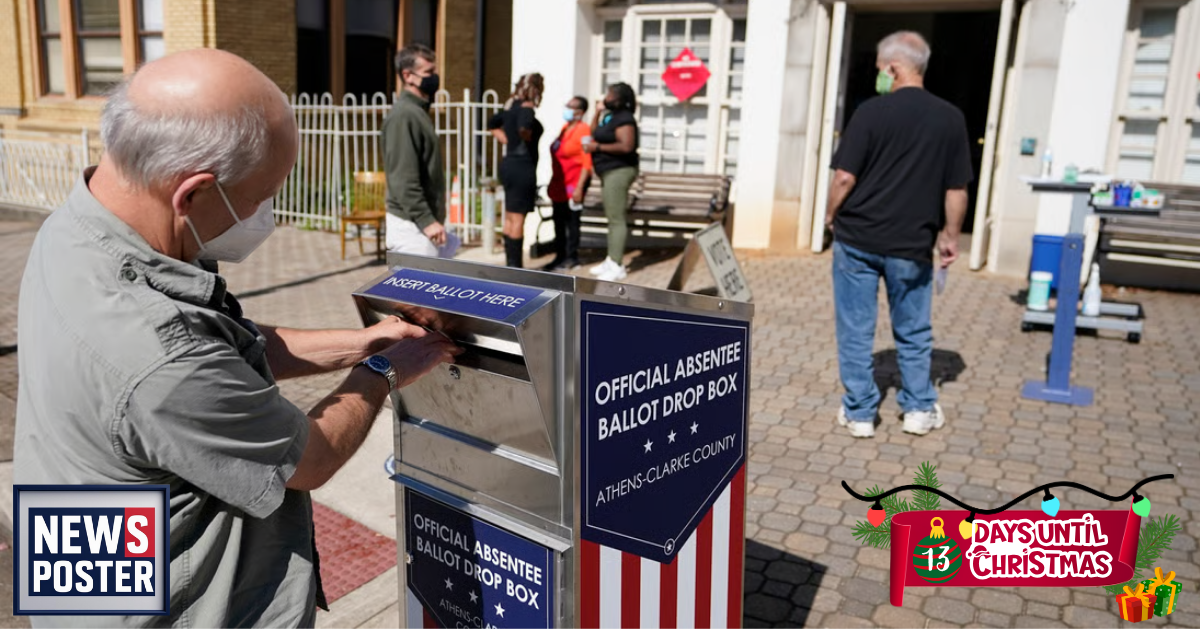
ATLANTA, GEORGIA – The Justice Department’s Civil Rights Division filed a lawsuit Friday seeking access to Fulton County’s ballots from the 2020 presidential election. The request includes all used and void ballots, absentee ballot signature envelopes, digital election files, and other records maintained by the county board of registration and elections.
The complaint, submitted to the U.S. District Court in Atlanta, alleges that Fulton County Superior Court Clerk Ché Alexander violated federal law by failing to provide the requested records. The legal challenge follows a July resolution by Georgia’s State Election Board urging the attorney general to enforce “compliance with voting transparency” and ensure access to election materials.
In October, the Justice Department sent a letter requesting the records, but Alexander responded that the materials were sealed and could not be released without a court order. The Fulton County Election Board has not issued a statement on the matter.
The lawsuit comes amid continued claims from former President Donald Trump and allies that voter fraud in Fulton County contributed to his 2020 loss, despite the state certifying Joe Biden’s narrow victory after a statewide audit and multiple recounts. Legal disputes over these claims have included defamation lawsuits against Rudy Giuliani, stemming from false allegations against Fulton County election workers.
Assistant Attorney General Harmeet Dhillon emphasized the department’s stance on election integrity, stating that states have a “statutory duty to preserve and protect their constituents from vote dilution” and that the Justice Department will act if states fail to comply with federal election law.
In addition to the Fulton County case, the department filed lawsuits Friday against Colorado, Hawaii, Massachusetts, and Nevada, alleging the states refused to provide their full statewide voter registration lists. The requested information includes voters’ names, dates of birth, addresses, and either driver’s license numbers or the last four digits of Social Security numbers.
Colorado Secretary of State Jena Griswold criticized the effort, saying the state will continue to protect voter information and asserting that Trump does not have a legal right to the data. The lawsuit against Colorado follows Trump’s symbolic pardon of former county clerk Tina Peters, who had been convicted for granting unauthorized access to voting equipment.
The Justice Department has now filed 18 similar lawsuits nationwide. States involved include California, Michigan, Minnesota, New York, New Hampshire, Pennsylvania, Delaware, Maryland, New Mexico, Rhode Island, Vermont, Oregon, Maine, and Washington. Indiana and Wyoming have provided complete voter rolls, while ten other states have supplied only publicly available versions, omitting sensitive information.
Nebraska and South Carolina voters have filed state court cases seeking to prevent their private voter data from being released. Some states, including Michigan, Louisiana, and Georgia, have conducted voter roll audits with support from the Department of Homeland Security, reporting that instances of noncitizen voting are extremely rare.