
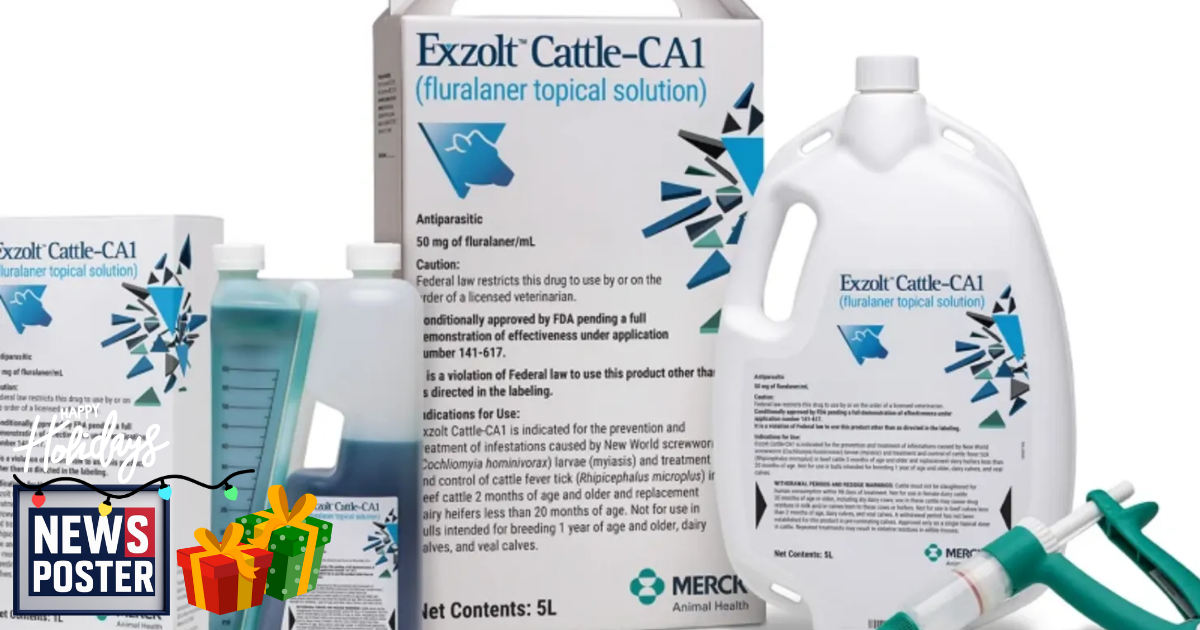
U.S. cattle ranchers are preparing to use a newly approved treatment to protect already diminished herds from the fast-spreading screwworm parasite, which has devastated cattle populations across Mexico and remains a growing threat to the American livestock industry. The U.S. Food and Drug Administration has issued conditional approval for EXZOLT CATTLE-CA1, a topical medication developed by Merck Animal Health to prevent and treat New World Screwworm infestations. The product is also cleared for treating and controlling cattle fever ticks, another persistent concern for ranchers in regions vulnerable to cross-border spread.
Merck Animal Health officials said the approval required extensive data to ensure food safety, noting that the product will come with a 98-day withholding period to guarantee no residue remains in meat. Each application lasts roughly 21 days before a new dose is needed. Initial shipments are being routed to distribution partners along the U.S.–Mexico border, where the risk is highest, with broader availability for veterinarians and producers expected by mid-January 2026. Despite its effectiveness, Merck stressed the drug will not eliminate the parasite quickly; specialists in Mexico anticipate a multi-year effort before the outbreak can be brought under control.
The screwworm parasite spreads when flies lay eggs in open wounds, and the larvae feed on the animal’s living tissue. Humans can also become infected. To protect domestic herds, the U.S. Department of Agriculture has kept the border closed to imports of live cattle, bison, and horses from Mexico since 2024. Before the closure, the U.S. imported more than one million cattle annually—around 3.3% of the nation’s total calf crop—making the disruption a significant factor in the livestock market. The outbreak has contributed to volatility in cattle futures and rising beef prices, a political flashpoint as economic issues weigh on President Trump’s approval ratings.
Industry challenges extend beyond parasites. Tariffs on feed and equipment, persistent drought, and shrinking herd sizes have also pushed beef prices higher. USDA data from November 2025 shows the U.S. cattle on feed at 11.7 million head, down 2% from the previous year, marking the smallest national herd since 1951. In response to reduced supply, Tyson Foods announced the closure of its major beef processing plant in Lexington, Nebraska, and operational cutbacks at its Amarillo, Texas, facility.
Ranchers say the new treatment will be an important tool as they confront ongoing threats. Sixth-generation Texas rancher James Clement III said access to effective medications is essential for combating screwworm and fever tick outbreaks, though producers will likely have questions about the product before adopting it widely. Cooler winter temperatures currently reduce the likelihood of screwworm-carrying flies reaching the U.S., but experts warn that risk will increase in the spring. Merck says enough supply is available to deploy rapidly for preventive use when temperatures rise, emphasizing that early treatment will be critical to containing the parasite and protecting the nation’s weakened cattle herd.