
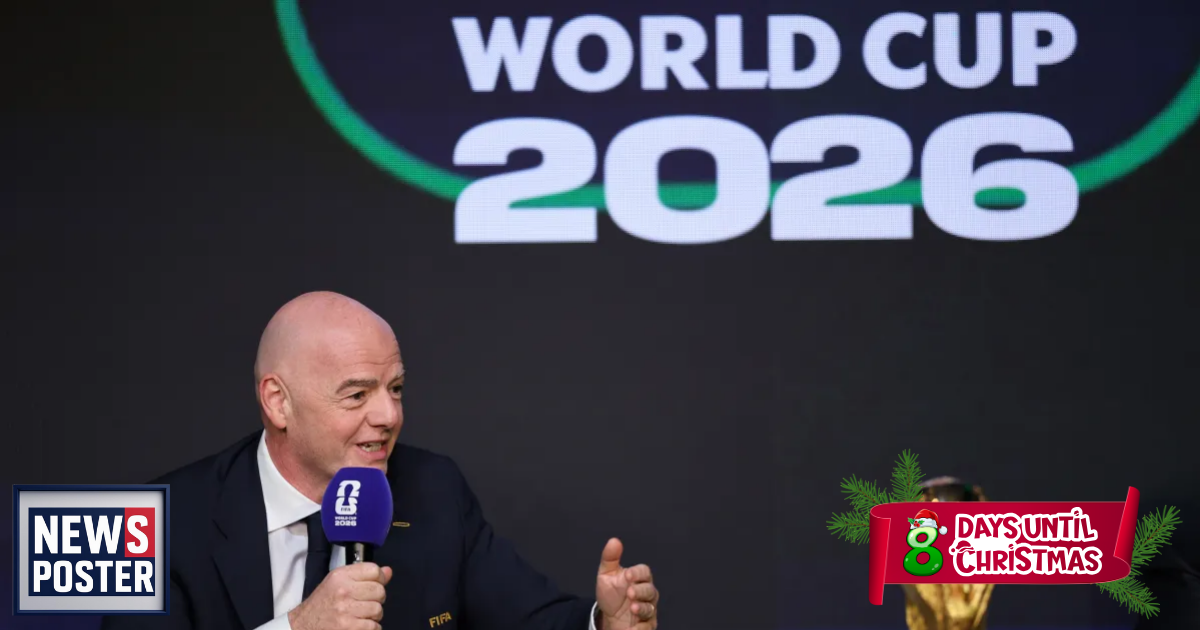
GENEVA, SITZERLAND – FIFA has sharply reduced the cost of a limited number of World Cup tickets after widespread global outrage over pricing, allowing some of the most loyal supporters to attend matches — including the final — for as little as $60 instead of prices that previously reached more than $4,000. The move marks an unusual retreat for the governing body and its president, Gianni Infantino, following intense criticism of FIFA’s commercial strategy for the expanded tournament in North America, which has drawn scrutiny for its high costs and its increasingly close political alignment with U.S. President Donald Trump. Under the revised plan, FIFA will introduce what it is calling a “Supporter Entry Tier,” making $60 tickets available for every match. These tickets will be distributed through national soccer federations to fans who have demonstrated long-term loyalty by regularly attending their teams’ matches both at home and abroad. Each team is expected to receive between 400 and 750 tickets per game at this reduced price, spread across 16 host cities, including 11 NFL stadiums in the United States, two venues in Canada, and three in Mexico.
While FIFA says the change is meant to better support traveling fans, it has not directly acknowledged the backlash that prompted the reversal. Supporter organizations, however, have been blunt in their assessment, arguing the move is a response to sustained global criticism rather than a genuine shift in philosophy. Fan groups say the limited number of discounted tickets leaves the vast majority of supporters still facing prices far higher than at any previous World Cup. This tournament will be the first to feature 48 teams instead of 32 and is expected to generate at least $10 billion in revenue for FIFA, while also becoming the most expensive World Cup ever for fans. Despite complaints, demand remains high, with FIFA reporting more than 20 million ticket requests during the latest sales phase. Even so, critics argue that the new pricing tier barely scratches the surface of the broader affordability problem.
Anger over ticketing intensified after fans discovered that participating teams were initially given no access to the lowest-priced ticket category, despite each team being entitled to roughly 8% of stadium capacity. Entry-level prices for many group-stage matches ranged from $140 to $265, with the higher end applying to games featuring global stars and heavily supported teams such as Argentina, Portugal, Brazil, and England. These figures stunned supporters, particularly because tournament co-hosts had pledged during the bidding process that hundreds of thousands of tickets priced around $21 would be available before the knockout rounds. At the same time, FIFA’s in-house hospitality program at modern NFL stadiums is expected to bring in billions of dollars, underscoring critics’ claims that profit has taken precedence over accessibility.
European fan groups have been especially vocal, objecting for months to the introduction of dynamic pricing and additional fees on FIFA’s resale platform — practices common in U.S. entertainment but largely unfamiliar and unpopular in global soccer culture. Frustration peaked when fans learned that supporters purchasing packages covering all potential matches their team could play, including the final, would not receive refunds for unused tickets until after the tournament ended. In another partial reversal, FIFA announced it would waive administrative fees on refunds processed after the July 19 final, easing but not eliminating concerns.
Disability access has also emerged as a major point of contention. Supporter groups have criticized FIFA’s resale platform for listing accessible seats at several times their original value, with no clear safeguards to ensure those tickets reach fans with disabilities. They also noted that supporters with disabilities no longer receive free companion tickets, a benefit that existed at the previous World Cup in Qatar. Advocacy groups have urged FIFA to rethink its policies and move beyond symbolic statements toward concrete action, arguing that true inclusion requires meaningful, enforceable commitments rather than last-minute concessions driven by public pressure.