
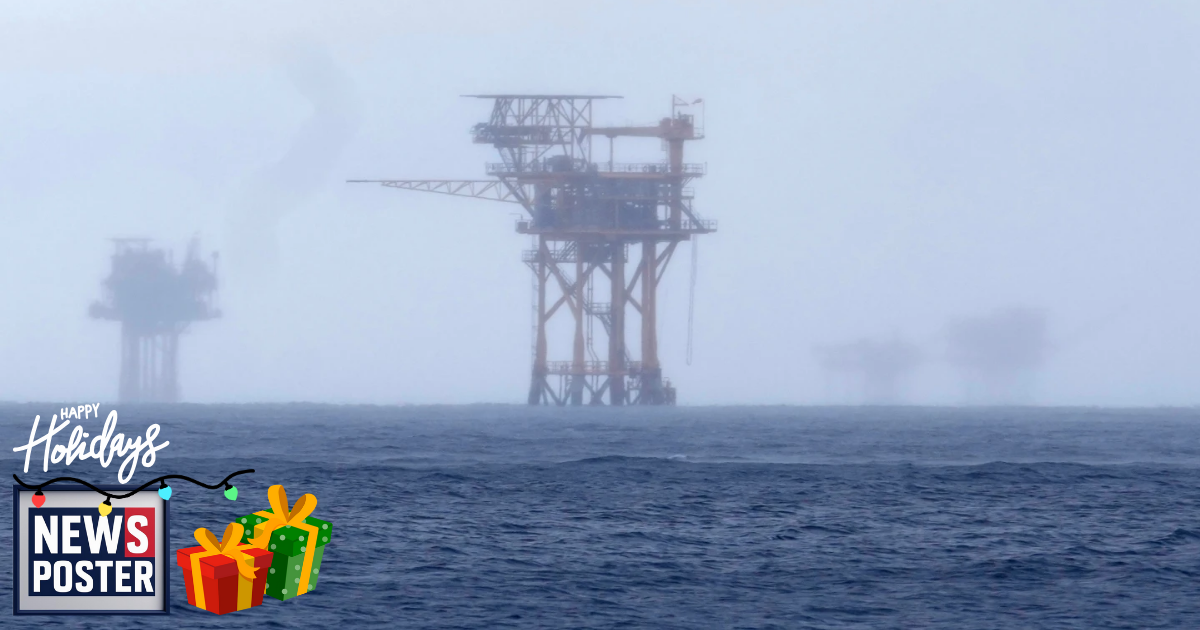
WASHINGTON – Oil companies committed more than $300 million in bids for new drilling rights in the Gulf of Mexico on Wednesday, marking the first in a series of 30 lease sales scheduled under a Republican-led push to expand U.S. fossil fuel production. The sale followed the administration’s recent decision to open new coastal areas in Florida and California to offshore drilling for the first time in decades, a move that has triggered resistance from critics worried about potential harm to coastal economies and tourism. The lease auction was required under a major tax-and-spending package approved earlier this year, establishing a 12.5% royalty rate for oil extracted from the new leases — the lowest deep-water royalty set in nearly two decades.
Thirty companies, including BP, Chevron, and Shell, placed bids on parcels spanning roughly 1,600 square miles. While the total exceeded $300 million in high bids, it still fell short of the $382 million generated in the final Gulf lease sale of the previous administration. Federal officials described the sale as a clear demonstration of renewed commitment to domestic offshore production and emphasized that regular lease offerings are returning after years of uncertainty. The new leasing schedule requires at least two Gulf of Mexico sales every year through 2039 and one more in 2040, giving the industry a more predictable long-term framework for exploration and development.
Supporters of the renewed leasing effort say the Gulf is open for business again after a period of slower activity, arguing that consistency in lease sales allows companies to plan exploration more strategically. Environmental groups, however, warned that expanding fossil fuel development in the region increases the danger of future oil spills and threatens vulnerable species, including the critically endangered Rice’s whale. They pointed to the Gulf’s long history of spill incidents — most notably the 2010 Deepwater Horizon disaster — and argued that the administration failed to adequately evaluate the risks before moving forward with the sale. Legal challenges from environmental organizations are ongoing, with some earlier lease sales still tied up in litigation over the government’s handling of climate and wildlife impacts.
Most of the parcels that received bids were located in waters deeper than 800 meters, underscoring continued interest in high-risk, high-reward deep-water development. Only a fraction of all parcels offered typically attract bids, with companies focusing on areas that complement existing infrastructure or hold the strongest potential for future drilling. Even with successful bids awarded, actual production can take years to begin. Federal officials said the lighter bidding this round may reflect the renewed consistency in leasing, giving companies less pressure to secure parcels all at once. The lease program also aligns with a broader directive to accelerate offshore oil and gas development, setting the stage for additional sales in the coming years.