
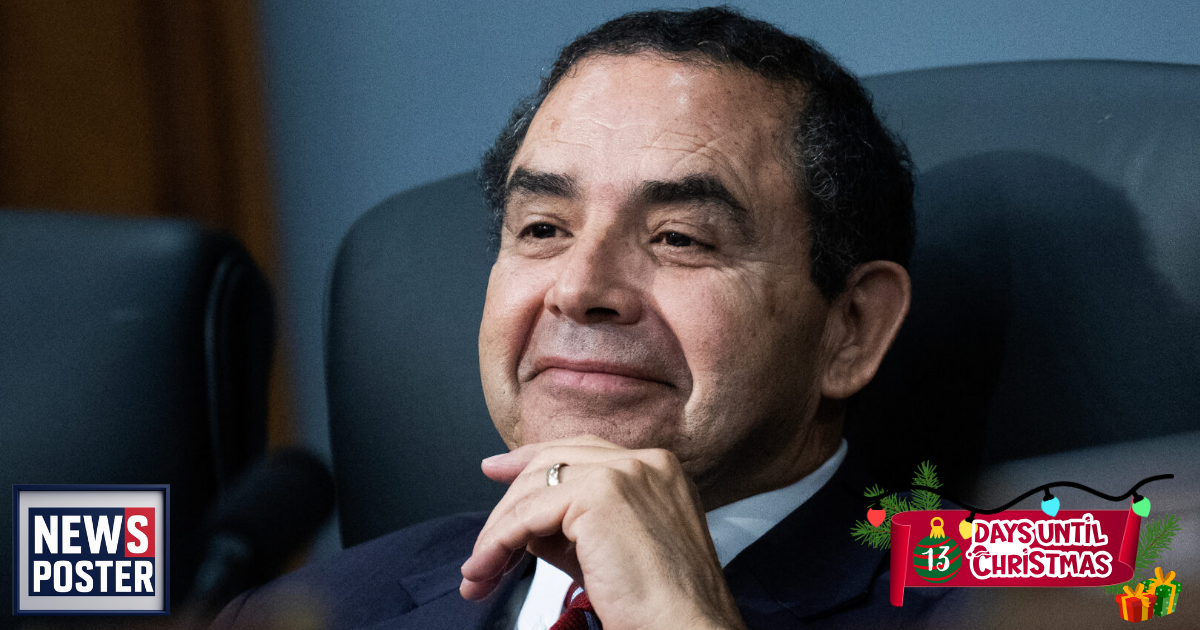
WASHINGTON – Democrats on the House Appropriations Committee voted Thursday to recommend reinstating Rep. Henry Cuellar as the ranking member of the Homeland Security subcommittee, following a presidential pardon for alleged bribery charges.
President Donald Trump granted a “full and unconditional” pardon to Cuellar and his wife, Imelda, last week, placing Democrats in the position of deciding whether to restore Cuellar to his former top Appropriations role without a trial having occurred. Cuellar and his wife deny the charges and maintain their innocence.
“We followed the rules of the caucus,” said Rep. Rosa DeLauro, D-Conn., the committee’s top Democrat, noting that setting caucus rules is not the committee’s responsibility. The caucus rules specify that if charges are dismissed, a previously indicted member who stepped down may be reinstated within the same Congress. Because Cuellar resigned in the previous Congress shortly after his May 2024 indictment, a vote was required to restore him.
The recommendation from appropriators is an initial step; the decision still needs approval from the Democratic Steering Committee and the full caucus. Committee members left Thursday’s meeting without commenting on the vote tally. Rep. Lauren Underwood, D-Ill., who served as acting ranking member of the subcommittee, declined to answer questions after the meeting.
Cuellar was charged with accepting roughly $600,000 in bribes from the government of Azerbaijan and a foreign bank in Mexico City. The Texas Democrat said there were no objections raised during Thursday’s vote. “We got ratified,” he stated.
Trump announced the pardon on social media, saying: “Henry, I don’t know you, but you can sleep well tonight — Your nightmare is finally over!” Less than a week later, Trump criticized Cuellar for not switching parties amid rising House Republican retirements.
The reinstatement occurs as Congress faces a tight deadline to finalize nine delayed fiscal 2026 appropriations bills by January 30. Some lawmakers are already considering the possibility of another stopgap funding extension for the Department of Homeland Security, with the House having released its full-year proposal while the Senate has yet to issue its version.