
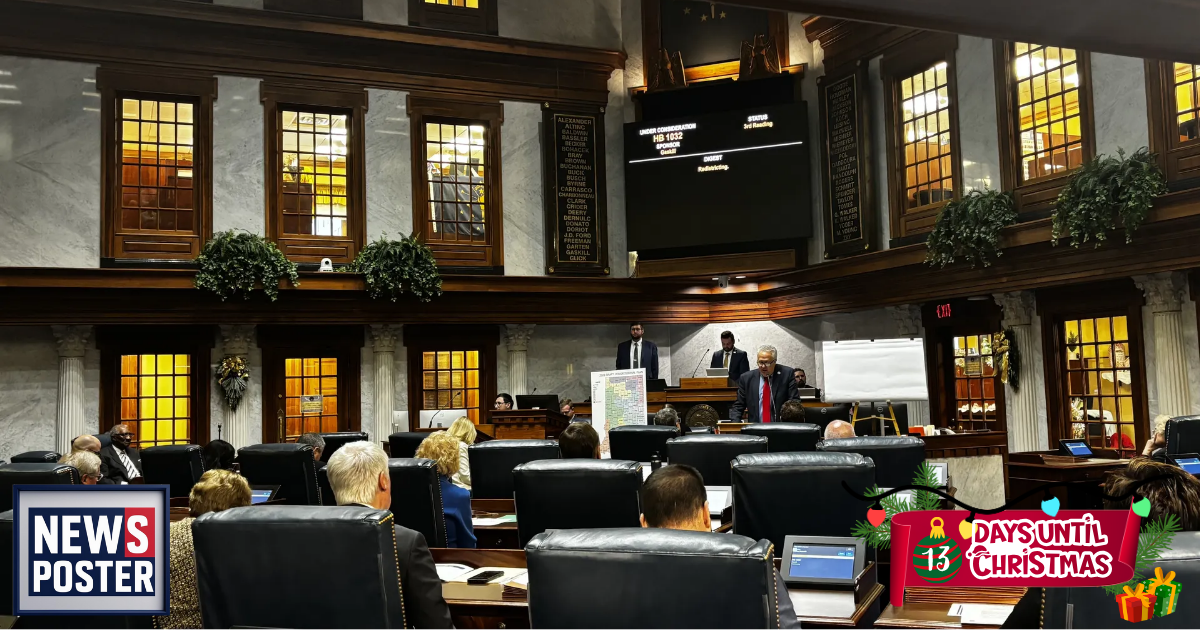
The Indiana Senate on Thursday rejected a Republican-backed redistricting plan that had drawn heavy pressure from former President Trump, marking a significant setback in the party’s effort to reshape the state’s congressional map. After three hours of debate, the chamber voted 31-19 against House Bill 1032, which would have redrawn districts to give Republicans a strong advantage in all nine congressional seats. Twenty-one Republicans joined the Senate’s 10 Democrats in opposing the measure, despite the House passing the bill easily last week.
Senate President Pro Tempore Rodric Bray (R-Martinsville) initially resisted calls to reconvene lawmakers for the vote, citing a lack of sufficient support within his caucus. Under mounting scrutiny and public pressure, Bray ultimately agreed to bring the vote forward. He voted against the bill, emphasizing that while Republicans aim to maintain a House majority, there is disagreement within the party over how to achieve that goal.
The redistricting effort was a high-profile test of Trump’s influence over Indiana Republicans, with the former president publicly criticizing lawmakers who expressed doubts and threatening political consequences for opposition. On Truth Social, Trump condemned Bray and other senators for failing to act, claiming other states had completed similar redistricting efforts “willingly, openly, and easily.”
Sen. Spencer Deery (R-West Lafayette) cited concerns about voter trust and election integrity in opposing the bill, while Sen. Greg Goode (R-Terre Haute) said his constituents did not want to be grouped into a district with Indianapolis and its suburbs. “My job is to best represent District 38 and the Hoosiers who call it home,” Goode said.
Governor Mike Braun criticized the senators’ opposition, stating that they had partnered with Democrats to reject the plan and pledged to work with Trump to hold them accountable politically. Trump and allied groups have signaled plans to support primary challengers and pour resources into statehouse races targeting Republicans who opposed the measure.
The vote reflects the broader mid-decade redistricting trend, with Texas and four other states already redrawing maps and additional states considering similar moves. With the regular legislative session underway, Bray noted the issue cannot return for further consideration this session, leaving the path forward uncertain.