
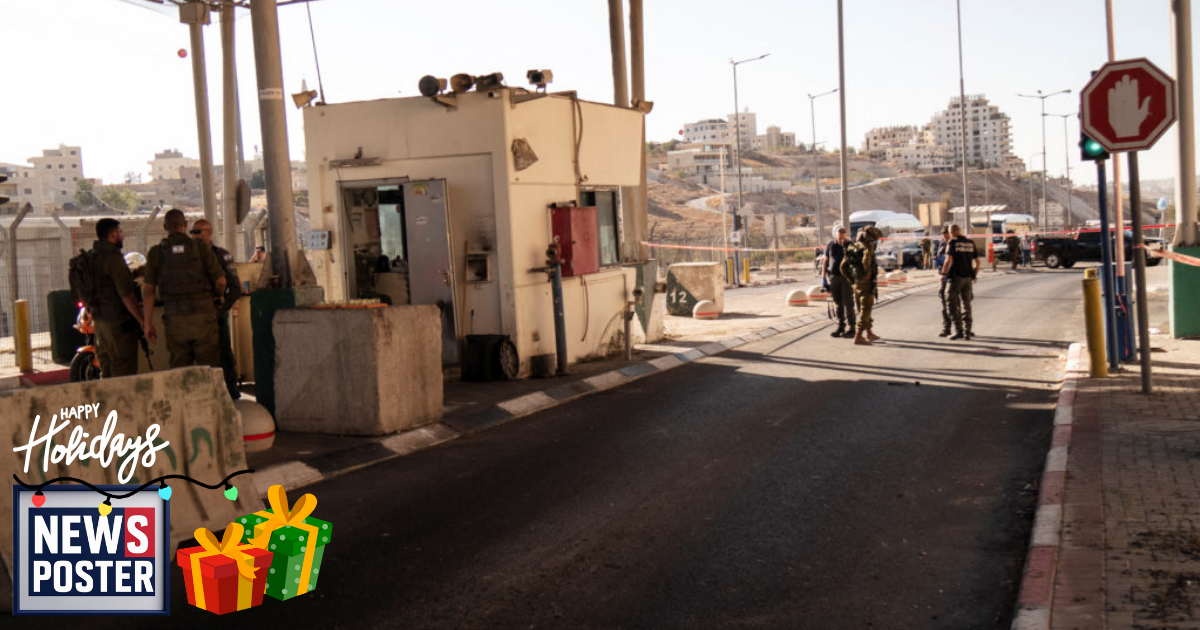
JERUSALEM, ISRAEL – Israel said Wednesday it will begin allowing Palestinians to leave Gaza through the reopened Rafah border crossing, following through on part of a U.S.-backed ceasefire agreement, even as tensions rise over the return of incomplete hostage remains. The reopening comes as doubts grow over the stability of the first phase of the truce after forensic testing showed that remains handed over by militants did not match the two hostages still believed to be in Gaza. Despite that setback, Israeli officials signaled they would press ahead with the implementation of key provisions of the deal. The initial phase of the agreement is supposed to conclude with the return of the final two hostages, while later stages envision the formation of an international stabilization force, creation of a technocratic Palestinian governing body, and the eventual disarmament of Hamas. Health officials say more than 16,500 sick and wounded Palestinians are in urgent need of evacuation from Gaza for medical treatment abroad, making the reopening of Rafah a critical development for humanitarian relief.
The two hostages whose remains are still unaccounted for are Israeli police officer Ran Gvili and Thai national Sudthisak Rinthalak. Israeli officials confirmed that the partial remains returned earlier this week did not belong to either man. Palestinian Islamic Jihad said its fighters resumed searches in northern Gaza on Wednesday, accompanied by Red Cross personnel, to locate the missing remains amid widespread destruction. Gvili was killed during the Oct. 7, 2023, attacks after rescuing civilians from the Nova music festival, while Rinthalak was an agricultural worker abducted from Kibbutz Be’eri. Thailand has said 31 of its nationals were taken hostage, most of whom have since been released, and 46 Thai citizens have been killed during the conflict. Since the current ceasefire began in early October, 20 living hostages and the remains of 26 others have been returned to Israel. Both sides continue to trade accusations of ceasefire violations.
Israeli military officials said the reopening of Rafah will be coordinated with Egypt and monitored by a European Union mission. Palestinians seeking to leave Gaza will be required to obtain Israeli security clearance, though officials indicated that all who wish to exit will be permitted to do so if Egypt agrees to receive them. The crossing will not initially be open for return travel into Gaza. Rafah had been sealed since May 2024 following Israel’s ground invasion of the area and was only briefly opened earlier this year to allow a limited number of medical evacuations under a previous truce. At the same time, Israeli Prime Minister Benjamin Netanyahu announced the appointment of an envoy to begin talks with Lebanese diplomatic and economic officials, marking what his office described as a preliminary step toward future cooperation between the long-hostile neighbors.
Meanwhile, violence has continued despite the ceasefire. A Palestinian man was killed by Israeli fire Wednesday in Gaza City’s Zeitoun neighborhood, according to hospital officials, who said the shooting occurred in an area designated as a “safe zone” under the truce. Gaza health officials report more than 360 Palestinians have been killed since the ceasefire took effect on Oct. 11, bringing the total reported death toll from the war to over 70,000. The exchange of bodies remains a central and fragile element of the agreement, with Israel releasing 15 Palestinian remains for each Israeli hostage returned. Gaza officials say 330 Palestinian bodies have been received so far, though many remain unidentified due to limited forensic resources. The ceasefire is aimed at winding down a war that began with the Hamas-led attack on southern Israel that killed about 1,200 people and resulted in 251 hostages being taken.