
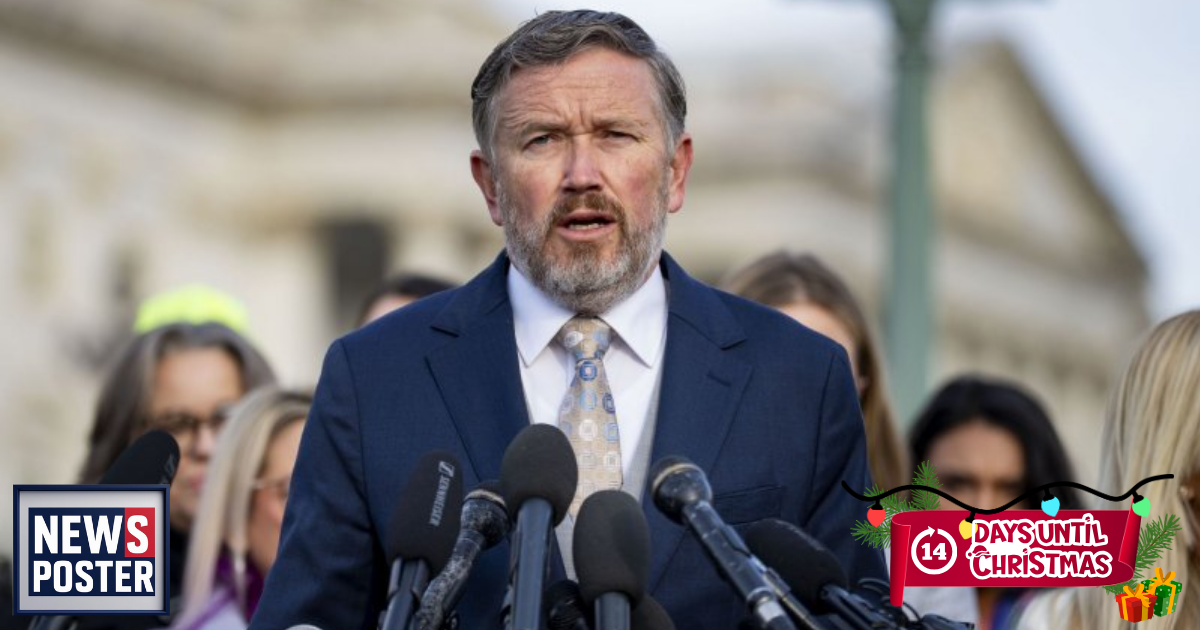
U.S. Rep. Thomas Massie, a Republican from Kentucky, has introduced legislation calling for the United States to withdraw from NATO. The measure, known as the Not a Trusted Organization Act, or NATO Act, will be co-sponsored by Florida Republican Rep. Anna Paulina Luna. Earlier this year, Utah Republican Sen. Mike Lee introduced similar legislation in the Senate.
Massie criticized NATO as a “Cold War relic,” arguing that U.S. involvement has cost taxpayers trillions of dollars while entangling the country in foreign conflicts. He said the funds could be better used for domestic defense and emphasized that the Constitution does not authorize permanent foreign commitments. Massie also noted that NATO was created to counter the Soviet Union, which dissolved more than three decades ago, and called on wealthy member nations to take greater responsibility for their own defense.
The NATO Act would prohibit U.S. taxpayer money from funding NATO’s budgets, including civil and military expenditures and the Security Investment Program. Under Article 13 of the North Atlantic Treaty, any member nation can withdraw after 20 years with a one-year notice. NATO, founded in 1949 with 12 members, now has 32, including Finland and Sweden, which joined in 2023 and 2024, respectively.
President Donald Trump, speaking at a NATO summit in The Hague, expressed support for the alliance’s mutual defense provisions under Article 5, first invoked after the September 11 attacks. Massie, who identifies as a fiscal hawk and constitutional conservative, has frequently disagreed with Trump on issues including foreign policy, government spending, and surveillance, though Trump has also criticized NATO, calling it “obsolete” during his 2016 campaign.
NATO member countries agreed in June on a new guideline to spend 5% of GDP on defense by 2035, though only a few currently meet or exceed the 3% benchmark. Republican senators such as Joni Ernst and Sen. Roger Wicker advocate for continued strong U.S. involvement. For the NATO Act to become law, it would need a House majority, 60 Senate votes to overcome a filibuster, and the president’s approval, leaving the measure’s fate uncertain.