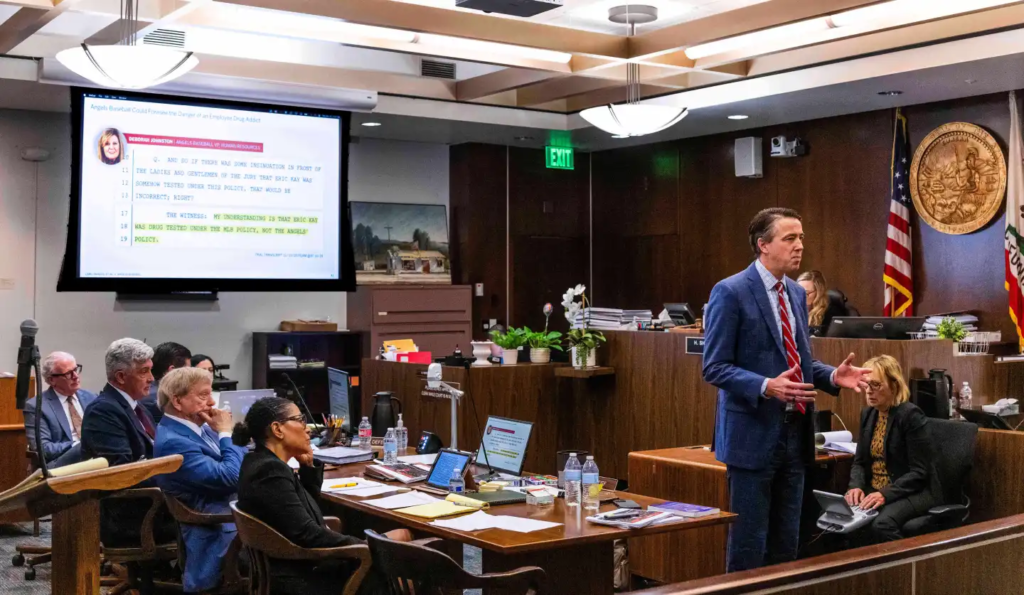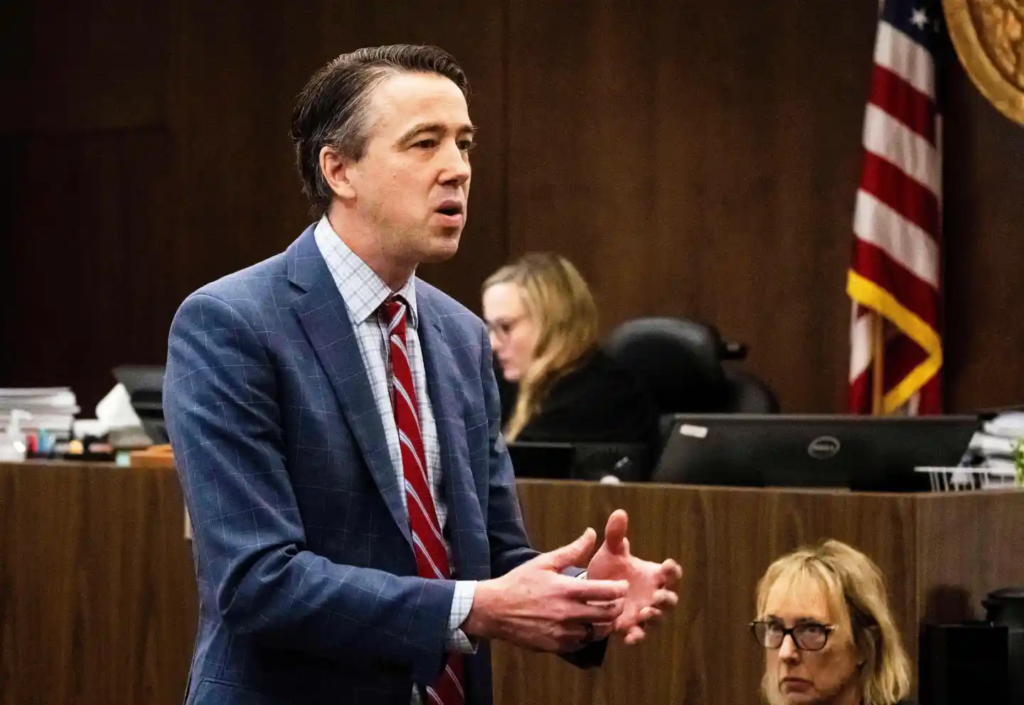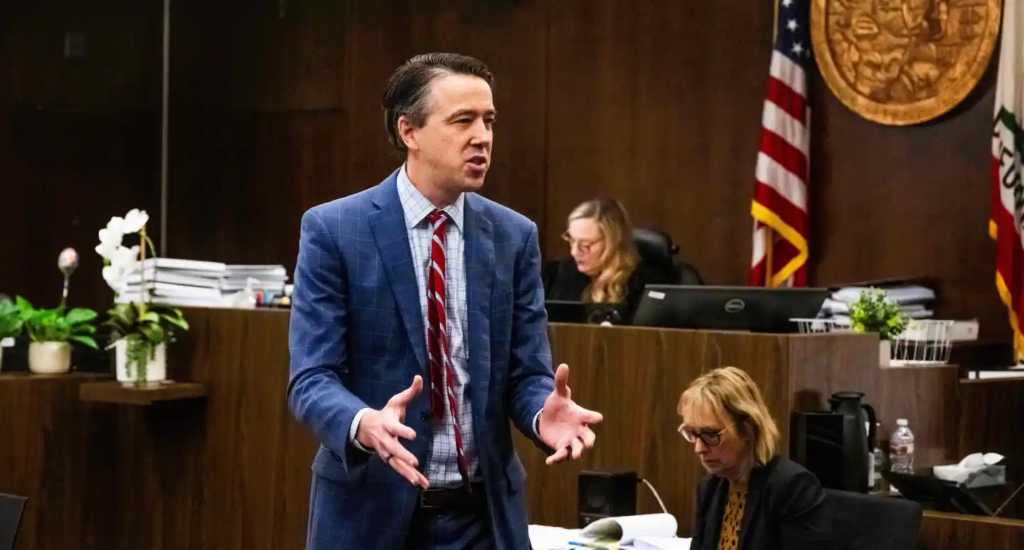

SANTA ANA, CALIFORNIA – An attorney for Tyler Skaggs’ family argued Monday that the Los Angeles Angels’ repeated failure to act on warnings about drug use and dealing by the team’s communications director directly contributed to the pitcher’s overdose death.
Daniel Dutko told jurors in a Southern California courtroom that evidence presented during the two-month civil trial shows Angels officials ignored multiple red flags regarding communications director Eric Kay, who had been found with plastic bags of pills at his home and had been hospitalized for a drug overdose. Despite this, Kay remained on the job and continued to have access to players, Dutko said. “This is a systematic breakdown over and over and over,” he told the jury during closing arguments.
The case stems from Skaggs’ death in 2019, when the 27-year-old left-handed pitcher died on a team trip to Texas after ingesting a fentanyl-laced pill supplied by Kay. Skaggs’ widow, Carli, and his parents filed a wrongful death lawsuit, claiming the Angels knew or should have known about Kay’s drug addiction and his distribution of drugs to players.
Angels’ attorneys have argued that team officials were unaware Skaggs was taking drugs and that any interactions between Skaggs and Kay occurred privately, outside the team’s supervision. The trial has included testimony from Angels outfielder Mike Trout, team president John Carpino, and Skaggs’ family, highlighting incidents in which players paid Kay for stunts or relied on him for tasks such as arranging massages and tee times. Dutko noted that Kay even obtained prescription medication for players and was found to have supplied drugs to seven members of the team.
“Why do you think the players think it is OK to go to the director or communications to get a prescription medication?” Dutko asked the jury. “Because they believed Eric Kay’s job responsibility was to get them whatever they needed.”
Skaggs was discovered dead in his hotel room in suburban Dallas in 2019 as the Angels were preparing to open a four-game series against the Texas Rangers. A coroner’s report indicated he choked on his vomit, with a toxic mix of alcohol, fentanyl, and oxycodone in his system. Kay was convicted in 2022 of supplying Skaggs with the counterfeit fentanyl-laced oxycodone and sentenced to 22 years in prison. His federal criminal trial included testimony from five MLB players who said they received oxycodone from Kay between 2017 and 2019.
During the civil trial, witnesses described Kay’s erratic behavior at the stadium and incidents that led to rehab prior to the team’s trip to Texas. Kay’s former wife, Camela Kay, testified that the Angels failed to intervene despite Kay’s long work hours and that during his 2019 hospitalization, she learned he had pills intended for Skaggs. Carpino testified he wished he had known earlier about drug use by both Skaggs and Kay.
Skaggs, a regular in the Angels’ starting rotation since late 2016, had previously played for the Arizona Diamondbacks and struggled with injuries throughout his career. Following his death, MLB reached an agreement with the players’ association to implement opioid testing and refer players who test positive for treatment.