
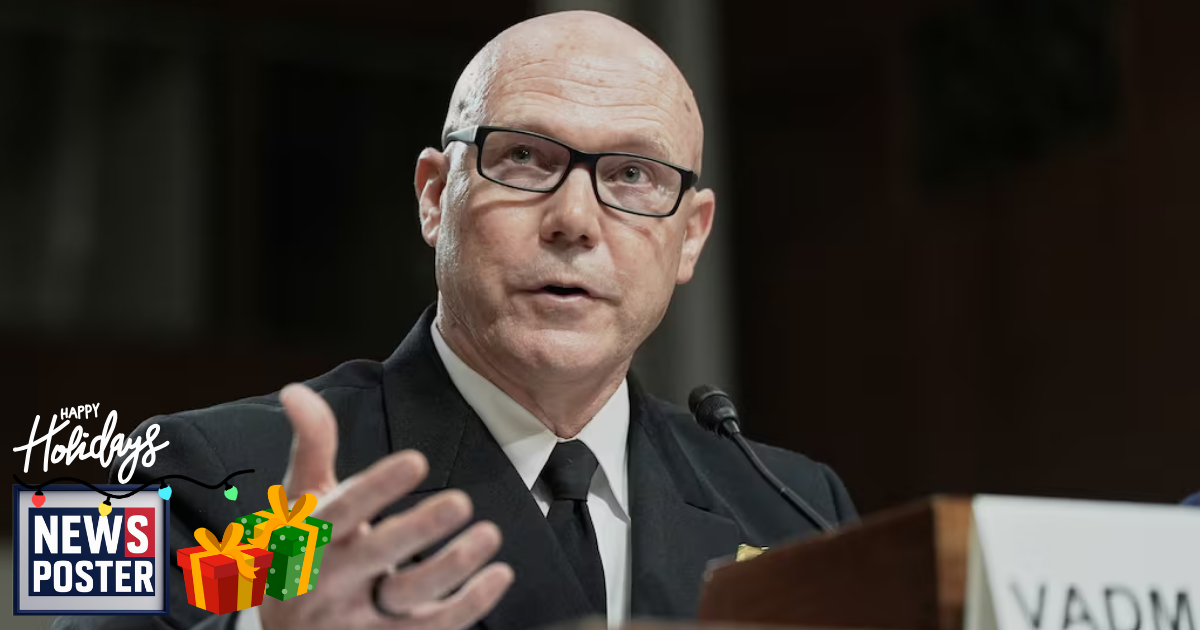
The Navy admiral who reportedly ordered a U.S. military strike on survivors of an alleged drug boat attack is set to brief top congressional lawmakers in a classified session Thursday. Adm. Frank “Mitch” Bradley, now commander of U.S. Special Operations Command, will provide details to members of the House and Senate Armed Services and Intelligence committees amid a growing congressional inquiry into Defense Secretary Pete Hegseth’s handling of the operation near Venezuela. Lawmakers are examining whether the strike violated U.S. or international law.
The briefing follows reports that Bradley, on Sept. 2, ordered attacks on two survivors in compliance with Hegseth’s alleged directive to “kill everybody.” Legal experts say targeting survivors could constitute a crime, prompting calls from both Democrats and Republicans for accountability. Bradley will meet separately with committee chairs and ranking members to clarify the orders given and the rationale for the second strike. Democratic lawmakers are pressing for the release of the full video of the attack and written records of directives from Hegseth, while Republicans have pledged a detailed review.
Senate Democratic leader Chuck Schumer called the incident “incredibly serious,” noting the potential legal consequences for U.S. service members and emphasizing the lack of publicly available information. Republican Sen. Roger Wicker, chair of the Senate Armed Services Committee, said the investigation will determine the “ground truth” behind the operation. President Donald Trump has defended Hegseth, who said the initial strike occurred in the “fog of war” and that Bradley “made the right call” during the follow-up attack.
Earlier Thursday, the Defense Department inspector general was expected to release a report reviewing Hegseth’s use of the Signal messaging app in March to coordinate a military strike against Yemen’s Houthis militants. The report reportedly found that his actions put personnel and missions at risk, although the Pentagon characterized it as an exoneration.
At the time of the Venezuela strike, Bradley commanded Joint Special Operations Command, overseeing elite units based at Fort Bragg, North Carolina. He was promoted a month later to lead U.S. Special Operations Command. Bradley’s military career spans over three decades, including deployments to Afghanistan after 9/11 and extensive service in the Navy SEALs. Senators from both parties have praised his record, but expect accountability if survivors were deliberately targeted.
Lawmakers are requesting executive orders authorizing the operations, full strike videos, intelligence used to identify targets, rules of engagement, and criteria distinguishing combatants from civilians. Reports indicate that survivors were present after the initial strike, and the follow-up was justified as necessary to sink the vessel. Congress aims to clarify who ordered the strikes and whether Hegseth was directly involved.
Republicans close to Trump have defended the military campaign against drug cartels, which the president has labeled “narco-terrorists.” The strikes, beginning in September, have killed more than 80 people. Critics, including Sen. Richard Blumenthal, argue that Hegseth bears responsibility for the second strike, noting that even if he was not physically present, his directives influenced the deadly outcome.