
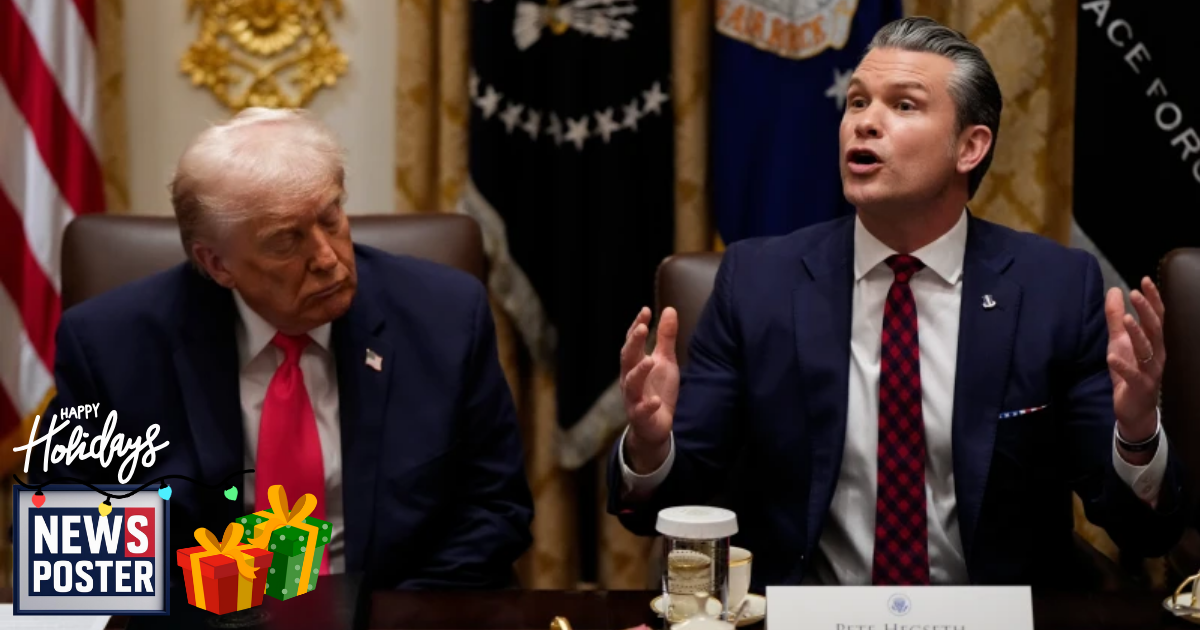
WASHINGTON – Pete Hegseth entered the role of defense secretary following one of the most contentious confirmation battles in recent memory, narrowly securing Senate approval after weeks of intense scrutiny over his qualifications, judgment, and temperament. Lawmakers from both parties raised concerns about his lack of traditional national security leadership experience and his outspoken public persona prior to taking office. Those doubts have only intensified in the months since his confirmation. Early in his tenure, he became embroiled in controversy after it was revealed that sensitive military discussions, including pending strikes in Yemen, were conducted using the commercial messaging app Signal. A subsequent internal watchdog review concluded that those communications created serious risks to both personnel and mission security, prompting new alarms within Congress about his handling of classified operational matters.
Now, just months into the job, Hegseth is facing what many lawmakers view as the most severe crisis of his leadership after reports surfaced of a second military strike on survivors of an earlier attack on a suspected drug-running boat off the coast of Venezuela. According to those accounts, U.S. forces allegedly targeted individuals who had survived the initial strike and were still in the water. Lawmakers are demanding the immediate release of full, unedited operational video from the incident and are openly questioning whether the second strike violated the laws of armed conflict. Legal experts have warned that attacking survivors could constitute an unlawful killing, raising the stakes of the investigation for both the Pentagon and the administration.
Since taking office, Hegseth has aggressively promoted what he calls a “warrior culture” within the Department of Defense, arguing that modern military operations are hampered by overly restrictive rules of engagement. He has repeatedly criticized what he describes as political correctness in warfare and has publicly urged commanders to prioritize maximum lethality. In defending the second strike near Venezuela, Hegseth pointed to the “fog of war,” saying explosions, smoke, and chaos made it unclear whether anyone had survived the initial impact when the follow-up attack was ordered. He pushed back forcefully against criticism, suggesting that those questioning the decision did not understand the realities of combat.
That explanation has failed to satisfy many lawmakers, including several Republicans who initially supported his confirmation. Some have openly stated that a catastrophic judgment failure appears to have occurred and that someone must be held accountable. Democratic lawmakers have gone further, asserting that the strike may rise to the level of a war crime and publicly calling for Hegseth’s resignation. Even some former military leaders now serving in Congress have voiced deep concern, saying they never believed Hegseth was suited to manage an institution as complex and powerful as the U.S. military.
Despite the growing backlash, President Donald Trump has so far stood firmly behind his defense secretary. Senate leadership allied with the administration has emphasized that military operations ultimately fall under the authority of the president as commander in chief and that Hegseth serves at the president’s pleasure. Still, the decision by both House and Senate Armed Services Committee leaders to formally open investigations represents a rare and significant move by Congress to assert its oversight authority over the executive branch, particularly on matters involving lethal force.
Hegseth also retains strong support from a circle of loyal allies on Capitol Hill. Key administration backers argue that he is being targeted precisely because he is not part of the traditional national security establishment. They claim the criticism is driven by resistance to Trump’s aggressive posture in Central and South America and his administration’s campaign to disrupt maritime drug trafficking operations. Supporters insist the controversy is being used to weaken that broader strategy.
Tensions between Congress and the Pentagon had already been rising prior to the Venezuela incident. Lawmakers have grown increasingly frustrated with new restrictions placed on communications between defense officials and Capitol Hill and with what they describe as an ongoing lack of transparency involving naval operations in the region. As pressure intensified, Hegseth personally reached out to the top leaders of the congressional committees overseeing the military. One senior House leader said he was satisfied after speaking with the defense secretary, while his Senate counterpart made clear that he expects Hegseth to testify publicly before Congress in the near future.
Rather than easing the situation, Hegseth further inflamed criticism by responding to early reports of the strike with a flippant social media post featuring a cartoon image of a turtle firing on a boat from a helicopter. Lawmakers from both parties condemned the post as disrespectful and reckless in light of the serious allegations. Senate Democratic leadership called the response embarrassing and inappropriate, renewing demands that the Pentagon immediately release the full operational footage so Congress and the public can see exactly what occurred.
In the coming days, congressional investigators are expected to receive closed-door testimony from the naval officer who reportedly authorized the second strike. Republicans say they are reserving judgment until that testimony is reviewed, while Democrats argue that the controversy is merely the latest example of long-standing concerns about Hegseth’s character and judgment. They have pointed to past allegations involving his leadership of nonprofit organizations, claims of workplace misconduct, and reports of drinking on the job that were raised during his confirmation hearing. Lawmakers warn that flaws in judgment become far more dangerous when paired with the authority to order lethal military force.
As investigations move forward and demands for transparency intensify, Hegseth now faces an uncertain future at the helm of the Pentagon. What began as a deeply polarizing confirmation has escalated into a confrontation over the legality of U.S. military actions, the protection of noncombatants, and the limits of executive power. Whether he survives the growing political storm will likely depend on what investigators uncover about the decisions made off the coast of Venezuela and whether the administration continues to shield him from mounting bipartisan pressure.

