
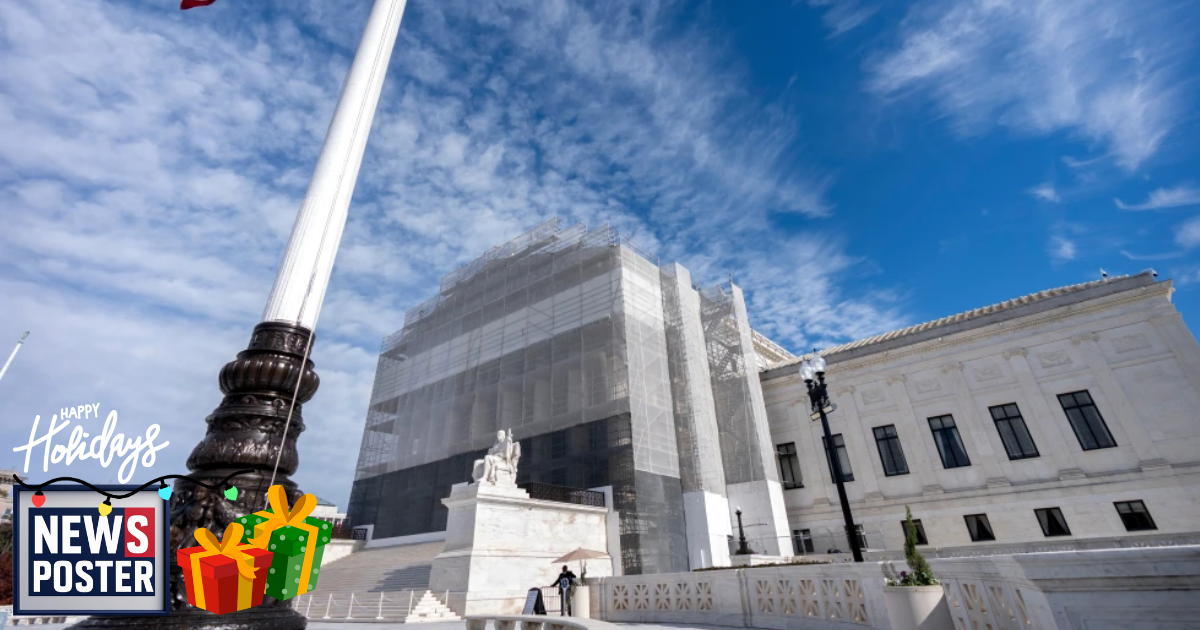
WASHINGTON – The Supreme Court announced Friday that it will review the constitutionality of President Donald Trump’s birthright citizenship order, a directive issued on the first day of his second term declaring that children born in the United States to parents who are in the country illegally or temporarily are not citizens. The justices agreed to take up the administration’s appeal of a lower-court ruling that blocked the order nationwide, preventing it from taking effect anywhere. Arguments are scheduled for the spring, with a ruling expected by early summer. The order is a central part of Trump’s broader immigration crackdown, which also includes major enforcement surges in several cities and the unprecedented peacetime use of the 18th-century Alien Enemies Act. Courts have been divided on these policies, with the Supreme Court blocking accelerated deportations of alleged Venezuelan gang members but allowing broad immigration stops to resume in Los Angeles after a lower-court interruption. Another major issue — whether the administration can deploy National Guard troops for immigration enforcement in the Chicago area — remains pending after being halted indefinitely.
The case before the Court originated in New Hampshire, where a federal judge blocked the policy in July in a class action on behalf of all children who would be affected. Lower courts across the country have consistently ruled that the order violates, or is likely to violate, the 14th Amendment, which has guaranteed birthright citizenship for more than 125 years with narrow exceptions involving foreign diplomats and occupying forces. Trump’s order challenges that long-standing interpretation by arguing that children of noncitizens are not “subject to the jurisdiction” of the United States. The administration’s legal team maintains that the Citizenship Clause was intended only for formerly enslaved people and their descendants, a position supported by twenty-four Republican-led states and more than two dozen Republican lawmakers, including Senators Ted Cruz and Lindsey Graham. The Supreme Court’s decision is expected to shape the future of birthright citizenship for generations, determining whether presidents can unilaterally redefine one of the most fundamental constitutional protections.