
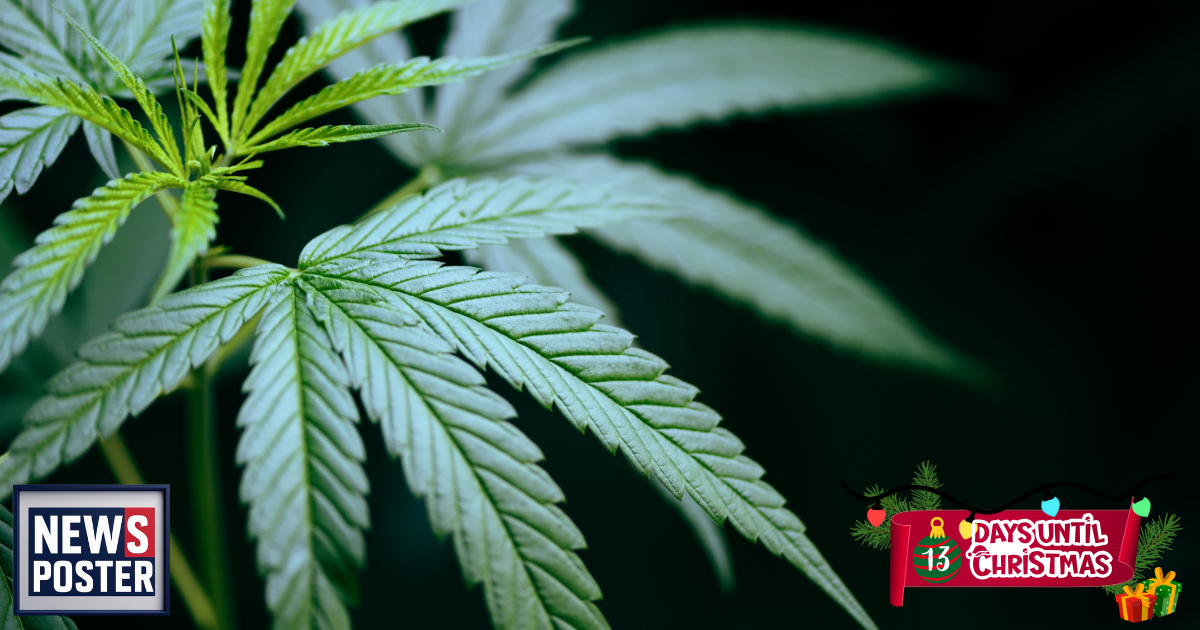
WASHINGTON – President Trump is expected to ease federal restrictions on marijuana use early next year, signaling a potential shift in U.S. drug policy.
The plan would reclassify marijuana, currently a Schedule I drug under federal law—the same category as heroin—into a less-restricted category. This change would reduce regulatory hurdles, make it easier to conduct medicinal research, and provide tax relief for cannabis companies. The move would not legalize recreational marijuana at the federal level, but it could simplify the transport of cannabis products across state lines and lower compliance costs for businesses.
Trump has shown growing openness to marijuana in recent months. In September, he posted on Truth Social advocating for Medicare coverage of hemp-derived CBD, and in August, he confirmed he was considering reclassifying marijuana as a Schedule III drug, meaning it would be recognized as having lower potential for abuse and accepted medical use.
Public opinion has increasingly favored marijuana reform. Recent polling shows 64% of Americans now support legalization, up from 36% in 2005, reflecting a steady rise over the past two decades. Currently, two dozen states, three U.S. territories, and Washington, D.C., have legalized marijuana for recreational use, while many others allow medicinal use.
Cannabis industry groups have actively engaged with Trump and his political network, with contributions to pro-Trump PACs and his inaugural fund. Analysts note that while Trump’s move could support the cannabis industry, some liberal organizations worry the effort is politically motivated, potentially allowing him to gain a political edge in the debate over marijuana reform.
White House officials say no final decision has been made, but the administration is reviewing surveys and public sentiment as it evaluates the next steps.