
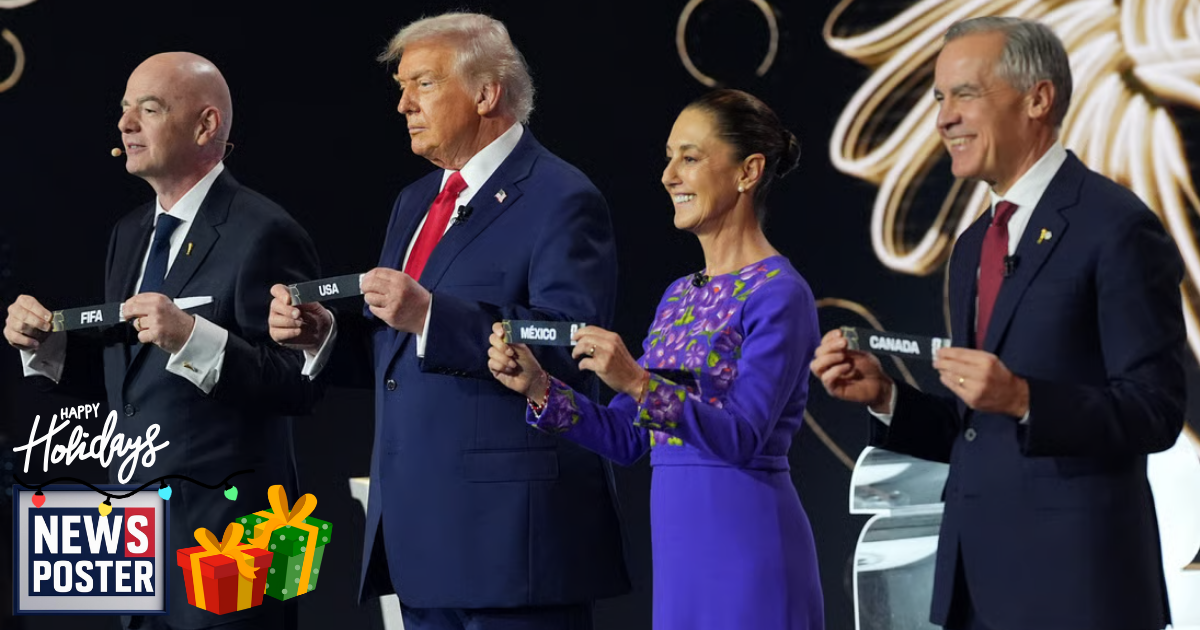
WASHINGTON – President Donald Trump has finally met in person with Mexican President Claudia Sheinbaum, marking their first face-to-face discussion since he took office over 10 months ago. The meeting, held during the 2026 World Cup draw, focused primarily on the tournament that the U.S., Mexico, and Canada are co-hosting, with side discussions addressing trade and tariffs, while immigration remained a secondary topic.
The long-awaited meeting had been delayed several times, including a planned June encounter at the G7 summit in Canada that was canceled due to rising tensions in the Middle East. During the World Cup draw at the Kennedy Center, Trump, Sheinbaum, and Canadian Prime Minister Mark Carney met privately, with discussions highlighting trade cooperation and the opportunities presented by the tournament. Sheinbaum confirmed on social media that the leaders agreed to continue collaboration on trade matters.
Mexico, the U.S.’s largest trading partner, remains subject to tariffs imposed on automobiles, steel, and aluminum, among other goods, although many broader levies have been paused. Sheinbaum’s diplomatic approach has helped mitigate some of these measures, earning her a reputation for effectively negotiating with Trump while balancing respect, occasional humor, and careful pushback.
While immigration was not the centerpiece of their discussions, Trump has continued aggressive deportation efforts in U.S. cities and deployed the National Guard to enforce immigration priorities. Meanwhile, Mexico has focused on security cooperation, giving more authority to its security chief and extraditing key cartel figures to the U.S., showing visible efforts against drug smuggling, including fentanyl production. However, Sheinbaum has rejected U.S. proposals to deploy troops in Mexico or conduct strikes on suspected drug shipments, maintaining her country’s sovereignty while managing the delicate bilateral relationship.
Overall, the meeting demonstrated progress on trade and security, while showing that both leaders are navigating a complex balance of diplomacy, economic interests, and border concerns ahead of the 2026 World Cup.