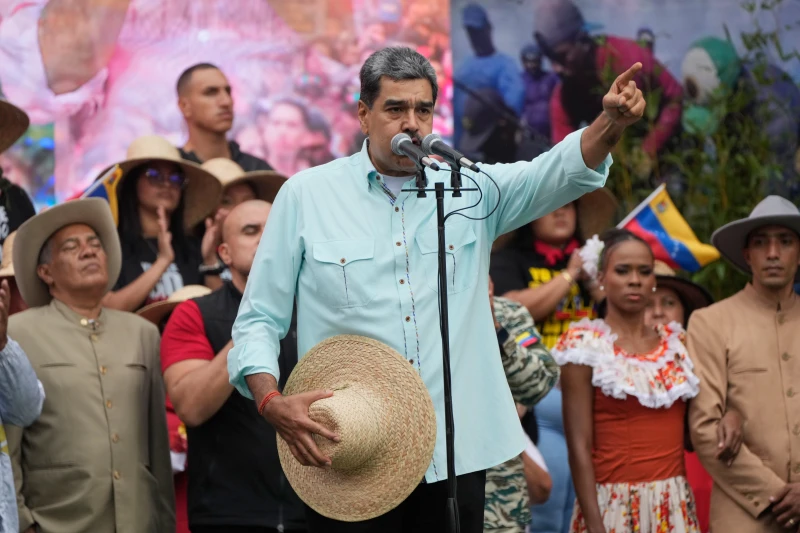
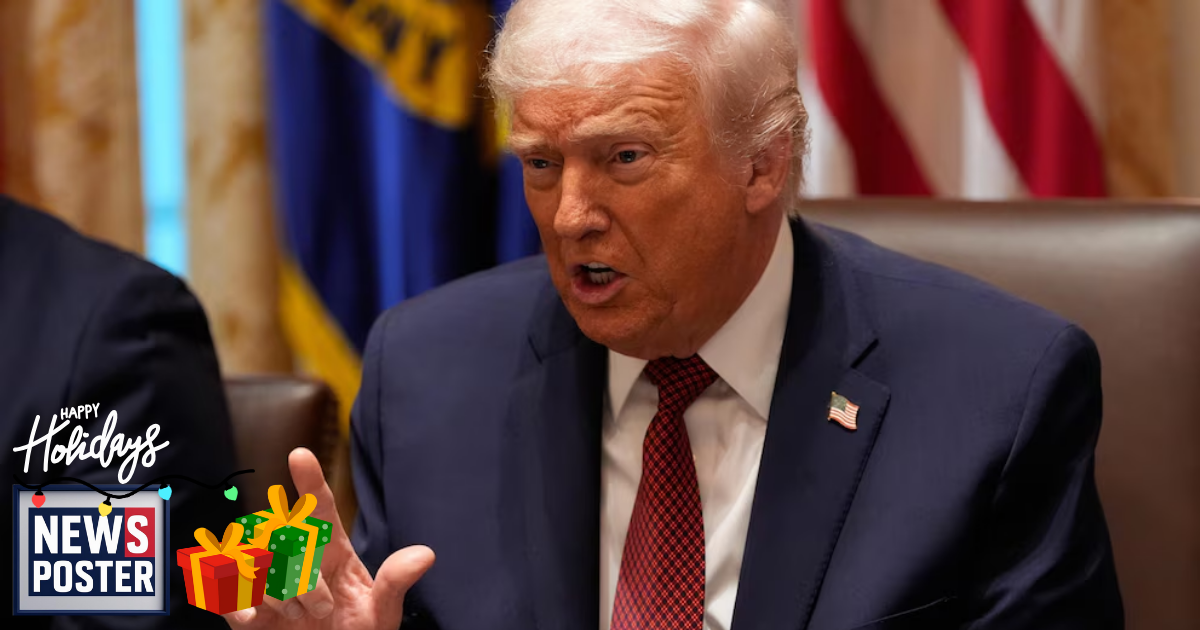
WASHINGTON – President Donald Trump announced Wednesday that the United States has seized an oil tanker off Venezuela’s coast, escalating tensions with President Nicolás Maduro’s government. The operation, carried out by the U.S. Coast Guard with Navy support, is an unusual move in which U.S. forces took control of a merchant vessel, marking a continuation of the administration’s efforts to pressure Maduro, who faces narcoterrorism charges in the U.S. The seizure follows a buildup of the largest U.S. military presence in the region in decades and a series of strikes against alleged drug-smuggling vessels in the Caribbean and eastern Pacific.
Trump described the operation at the White House as the largest tanker ever seized, adding only that it was “for a very good reason” and leaving questions about the fate of the oil on board unanswered. The tanker, identified as the Skipper, departed Venezuela around Dec. 2 carrying about 2 million barrels of heavy crude, roughly half of which was tied to a Cuban state-run oil importer. The vessel was formerly known as the M/T Adisa, previously sanctioned for involvement in a network smuggling oil on behalf of Iran’s Revolutionary Guard and Lebanon’s Hezbollah.
Coast Guard personnel boarded the ship by helicopter from the aircraft carrier USS Gerald R. Ford, a deployment highlighted in a video showing them fast-roping onto the vessel and moving through its superstructure with weapons drawn. Attorney General Pam Bondi said the tanker had been sanctioned for years due to its role in illicit oil shipments supporting foreign terrorist organizations. Venezuela condemned the seizure as “blatant theft” and “international piracy,” accusing the U.S. of targeting the country’s natural resources.
The move has drawn criticism from some U.S. lawmakers and experts. Sen. Chris Van Hollen, D-Md., suggested the action indicates the military operations are aimed at regime change rather than drug interdiction. Naval historian Vincent P. O’Hara called the seizure “very unusual” and “provocative,” noting it could disrupt maritime traffic and Venezuela’s economy. The incident follows a show of force that included U.S. fighter jets flying near Venezuelan airspace and a broader campaign of strikes that have killed at least 87 people since early September, raising legal and congressional scrutiny over the administration’s use of military force in the region.