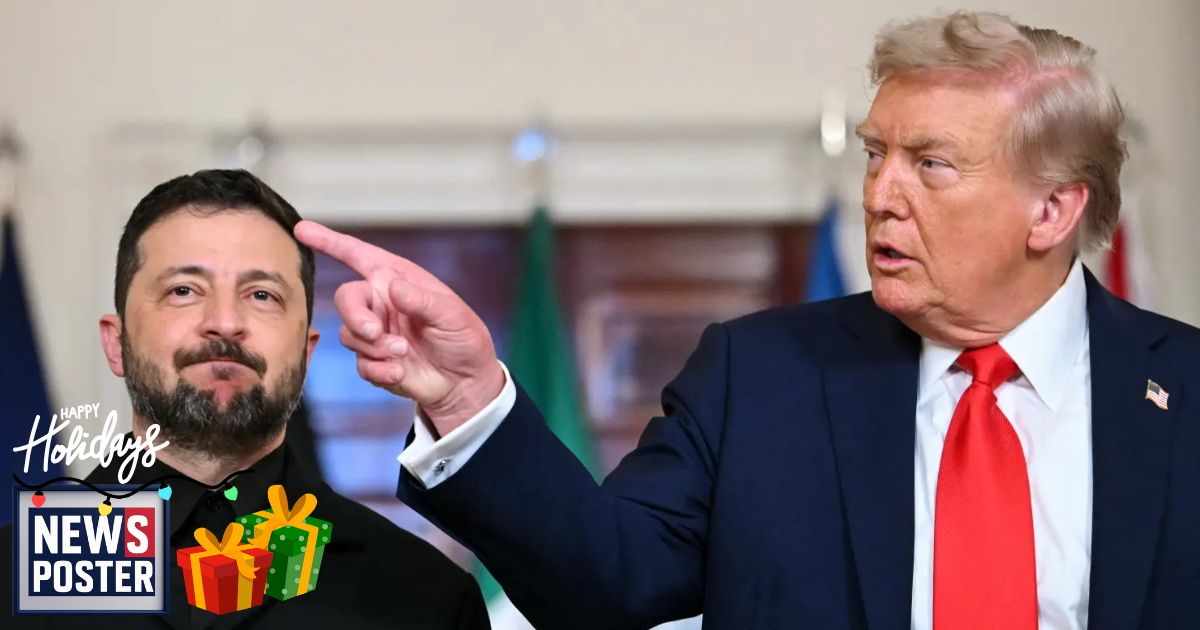
Tensions between U.S. President Donald Trump and Ukrainian President Volodymyr Zelenskyy are rising after Trump said Zelenskyy has yet to review a U.S.-backed peace proposal.
“I’m a little bit disappointed that President Zelenskyy hasn’t yet read the proposal, which was as of a few hours ago,” Trump said Sunday night. “His people love it, but he hasn’t [read it],” Trump added that Russia may be willing to accept the plan, but he was unsure about Zelenskyy’s position.
It remains unclear which version of the peace plan Trump was referencing. The comments followed talks in Miami between U.S. and Ukrainian officials, which ended without an apparent agreement on the latest draft. Multiple versions of the plan have circulated, with disputes focusing on Russian territorial demands and security guarantees for Ukraine.
Trump’s outgoing Ukraine envoy, Keith Kellogg, said a deal is “really close,” dependent on resolving two key issues: the status of Ukraine’s Donbas region, largely occupied by Russian forces, and the Russian-held Zaporizhzhia nuclear power plant in southern Ukraine.
Ukraine offered a more measured assessment. Zelenskyy described the Miami discussions—held between his chief negotiator Rustem Umerov, Ukraine’s military chief General Andriy Hnatov, and Trump’s special envoy Steve Witkoff and son-in-law Jared Kushner—as “constructive, though not easy.” Zelenskyy said he would debrief with his team in person, noting that “some matters can only be discussed in person.”
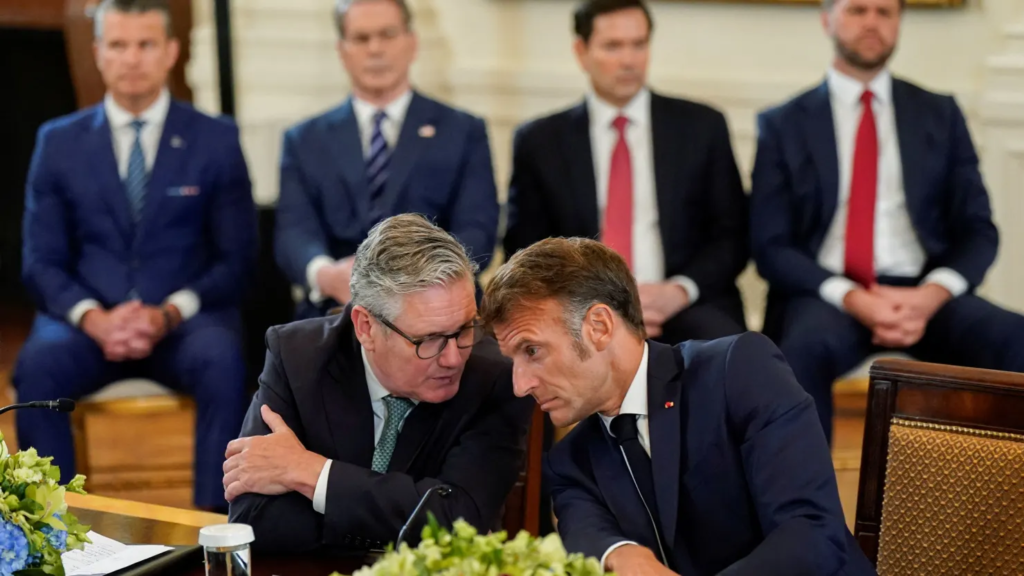
Zelenskyy is traveling to London on Monday for meetings with U.K. Prime Minister Keir Starmer, French President Emmanuel Macron, and German Chancellor Friedrich Merz to discuss the peace negotiations and next steps. He is also scheduled to visit Brussels and Rome later this week. European allies are pushing to be involved, with the U.K. and France advocating for a “Coalition of the Willing” to help guarantee post-war Ukraine’s security. Russia opposes any foreign troop deployment, with President Vladimir Putin warning such forces would be “legitimate targets.”
The release of Trump’s latest national security strategy, which warned that Europe risks “civilisational erasure” and called for renewed strategic stability with Russia, has heightened European concerns. The Kremlin praised the strategy, saying it largely aligns with Russia’s “vision.”
While the U.S. and Russia share an interest in eventual rapprochement, immediate peace talks remain unresolved. Last week’s discussions in Moscow between Witkoff, Kushner, and Russian officials ended without a breakthrough, with Russian presidential aide Yuri Ushakov calling the meetings “very useful, constructive, and highly informative,” but noting that more work is needed.