
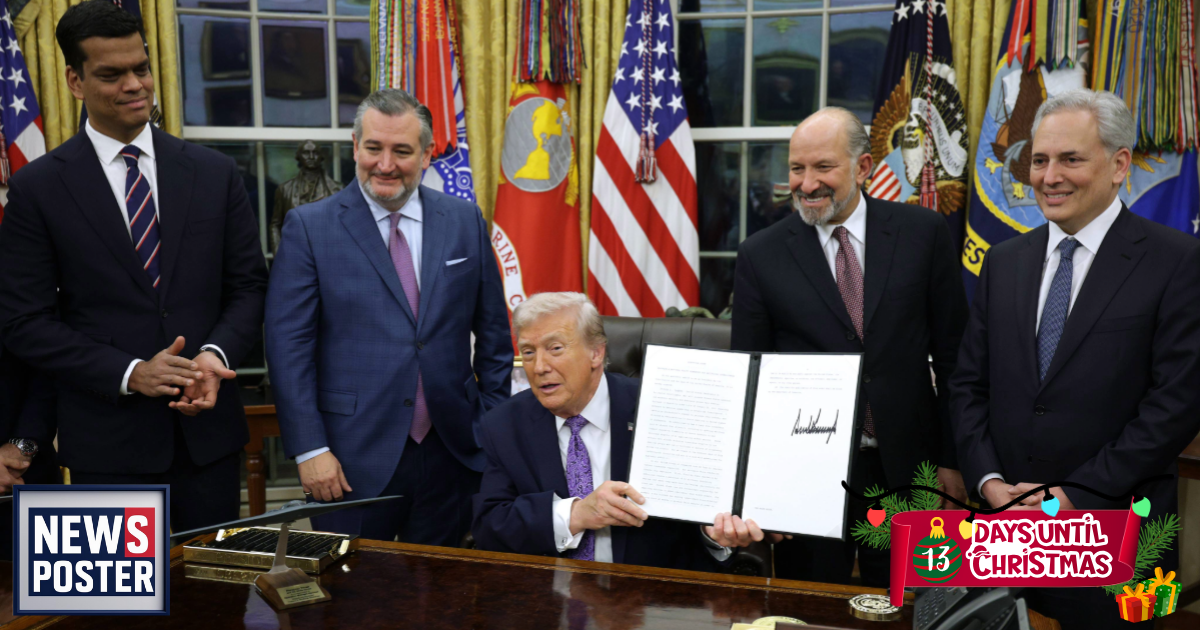
WASHINGTON – President Trump on Thursday signed an executive order aimed at overriding state-level AI laws, setting the stage for potential legal battles nationwide and sparking tension within the Republican Party. The move reflects an aggressive push by Trump and his AI adviser, David Sacks, to limit state regulation and give industry a unified federal framework.
The executive order instructs federal agencies to challenge restrictive state AI laws and ties compliance to federal grant eligibility. Trump argued the order will simplify operations for companies, saying businesses cannot navigate “50 different approvals from 50 different states.” He claimed the effort enjoys “great Republican support” and possibly backing from Democrats as well. White House staff secretary Will Scharf described the order as ensuring AI can operate under a single national framework rather than being constrained by state-level rules.
The order directs the attorney general to establish an “AI Litigation Task Force” within 30 days to contest state AI laws, particularly those that may unconstitutionally regulate interstate commerce. The commerce secretary is tasked with reviewing existing state laws that conflict with the executive order, including requirements that AI models alter outputs or disclose information in ways that could violate the First Amendment. Within 90 days, the Commerce Secretary must issue guidance on state eligibility for remaining Broadband Equity, Access, and Deployment funds to expand internet access.
The executive order also calls for the White House to prepare legislative recommendations for Congress to establish a federal AI framework that preempts conflicting state laws while safeguarding children, protecting against censorship, respecting copyright, and ensuring community protections. Until such a national standard exists, the administration intends to act against state laws deemed excessively restrictive to prevent stifling innovation.
The move comes after Congress rejected efforts to include AI preemption language in both the annual defense policy bill and the budget, representing setbacks for the administration’s push to shape AI policy through legislation. Some MAGA conservatives and Republican governors have criticized the executive order as overly broad and overly favorable to AI companies at the expense of states’ rights. Legal challenges from states and internal Republican disputes are expected to follow.